















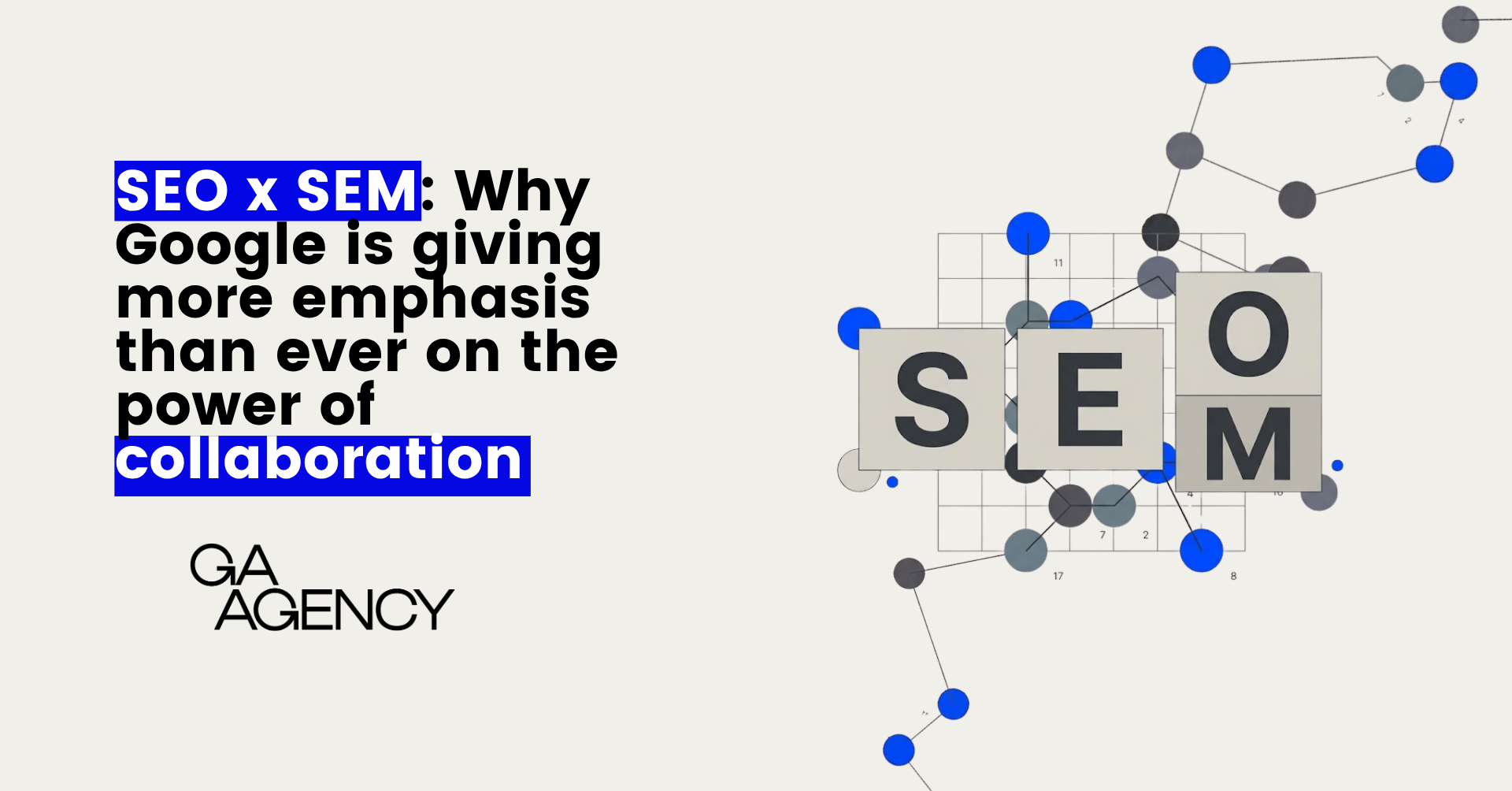
It is unusual for Google’s advertising channels to talk about organic search. This week Google Ads promoted a message from its Rethink ROI 2026 event that could have come from an SEO team: good Search Engine Optimisation is good Generative Engine Optimisation.
The line comes from Brendon Kraham, Google’s VP of Search & Commerce and it repeats the position Google Search Central set out in its guide to optimising for generative AI features. Much of the industry will read it as Google dismissing GEO as a rebrand.
That reading misses that Google’s advertising and organic teams are now describing the same foundations. The brands that do well in AI-led search will be the ones that build those foundations once and use them on both sides of the results page.
What Google actually said
The first source is Google’s guide to optimising for generative AI features, last updated on 10th July 2026. Its position is that AI Overviews and AI Mode are rooted in Google’s core ranking and quality systems. They retrieve pages from the Search index through grounding and use query fan-out to run related sub-queries in parallel. From Google’s perspective, optimising for generative AI search is still SEO.
The guide then lists what it treats as myths: llms.txt files, dividing content into small pieces, rewriting pages for AI systems, seeking inauthentic mentions and treating structured data as a requirement. It also sets a hard condition: a page must be indexed and eligible to appear with a snippet before it can appear in AI features at all.
The second source is the Rethink ROI material. Kraham made three points: AI expands discovery, with people asking longer, more conversational questions in AI Mode across more touchpoints; generative experiences rest on core ranking systems, so content should be built for people rather than bots and ads should become answers, pairing authentic content and real-time data with Google’s AI-powered campaigns.
The event’s lead-generation action plan covers data quality, Smart Bidding aligned to business goals, AI Max for Search and Performance Max and flexible budgets. Its final step links directly to the Search Central guide. An advertising playbook that ends by pointing to organic documentation is a clear sign that Google sees the two as one system.
Why this should be on the agenda
1. “Good SEO” is a higher bar than it sounds
Google’s tone is reassuring, but the substance is demanding. The guide’s central test is non-commodity content: a distinct point of view, first-hand experience and expertise that could not be produced by summarising the web or prompting a model.
Most brand content fails that test and international brands fail it more often. A page translated from a central brief into twelve languages is commodity content in every one of them, because it adds nothing a local reader could not find elsewhere. When AI Mode fans a query out into related sub-queries, it looks for sources with something specific to say. A translated page rarely qualifies.
Google has now confirmed that the bar is the one most brands were already struggling to clear.
2. Paid and Organic now draw on the same inputs
“Turn your ads into answers” is where the two halves meet. AI Max and Performance Max build ads and select landing pages from the advertiser’s site content, product data and conversion signals. The same pages feed organic AI answers. Merchant Center feeds and Business Profile data, which the Search Central guide names as routes into AI responses, also power Shopping and Performance Max.
A thin category page, an incomplete feed or a broken conversion import is therefore no longer an SEO issue or a Paid Media issue: it weakens the brand in both places at once. Organisations that run Paid and organic as separate teams with separate roadmaps will end up fixing the same problem twice or not at all.
Content and data quality are now shared infrastructure and should be governed that way.
3. Google is speaking for Google
The guide describes Google Search and nothing else. Its dismissal of llms.txt, for example, rests on Google Search ignoring the file. ChatGPT, Perplexity and Claude retrieve and cite sources in their own ways and product discovery in ChatGPT increasingly runs through merchant feeds connected via OpenAI’s Agentic Commerce Protocol.
None of this makes Google’s guidance less useful. Crawlable pages, clear structure, original expertise and credible third-party coverage matter on every AI surface. But feed requirements, citation patterns and measurement differ by platform and a plan built only around Google will miss part of the picture.
What to do about it
- Audit commercial content for commodity risk, market by market. Ask whether each priority page says anything a competitor’s page or an AI summary could not. Start with markets where content was translated.
- Fix eligibility before chasing citations. By Google’s own account, llms.txt files, divided rewrites and seeded forum mentions will not compensate in Google Search.
- Put Paid and Organic on one content and data roadmap. Landing pages, product feeds and conversion data serve AI-led campaigns and organic AI answers alike.
- Measure the longer journey. Add Search Console’s Generative AI performance report to regular reporting, import offline conversions and track referrals from non-Google AI platforms separately so that AI-led discovery does not disappear into direct traffic.
The real signal in Google’s message is commercial. Its ad business now needs the same foundations its search team has described for years, because AI-led campaigns perform only as well as the content and data underneath them. That’s the conversation to have with us.
Sources
- Google Ads, LinkedIn post on Rethink ROI 2026, October 2026
- Google, Accelerate with Google: Rethink ROI, https://business.google.com/us/accelerate/rethink-roi/
- Google Search Central, Optimizing your website for generative AI features on Google Search (updated 10 July 2026), https://developers.google.com/search/docs/fundamentals/ai-optimization-guide
Article author