

















Table of Contents
Executive Summary
- AI now underpins the entire marketing lifecycle, shifting from isolated tools to core infrastructure for planning, production and optimisation.
- Search is moving toward AI-generated answers, making structured, authoritative content essential for visibility across multiple engines.
- Personalisation is becoming prediction-led, with real-time decisioning shaping journeys while human oversight safeguards trust and relevance.
- Privacy-first data strategies are now foundational, with consented identity, clean rooms and secure collaboration replacing third-party signals.
- Global growth depends on localisation at scale, combining AI-enabled efficiency with native expertise to meet cultural, regulatory and platform expectations.
2026 Top Digital Marketing Trends and Predictions
The pace of change in digital marketing is accelerating, and the foundations of how brands grow are being rebuilt in real time. What was experimental only a year or two ago has evolved into the core operating system of modern marketing. Our review of the latest insights from leading sources shows one consistent pattern across industries: 2026 is the year in which AI becomes fully embedded across the marketing lifecycle.
Generative and applied AI are no longer isolated tools. They now underpin creative production, audience modelling, media optimisation, customer experience, and measurement, with early agentic systems beginning to automate multi-step workflows.
At the same time, search is shifting to answer engines, personalisation is moving toward predictive models, and privacy expectations are reshaping data collection, governance and activation. Customers want interactions that are personalised, relevant and privacy-respecting, delivered consistently across channels and markets. Meeting these expectations has become a requirement for brand relevance, not a differentiator.
This report outlines the 2026 digital marketing trends that will shape how organisations compete and grow. Each trend is supported by recent evidence and paired with practical actions your business can take to move from experimentation to operational maturity.
AI Becomes the Marketing Operating System
AI-Native Marketing Stacks With Human Oversight
AI has evolved from isolated pilots into core marketing infrastructure, supporting content creation, media optimisation, audience modelling and reporting. The most advanced organisations now operate AI-native marketing stacks where generative and applied models accelerate production and decision-making at every stage of the lifecycle.
Even with this shift, human judgement remains essential. Teams use AI to scale ideation, testing and execution but rely on human editors, strategists and specialists to guide prompts, refine outputs, enforce brand standards and validate accuracy. This hybrid model ensures that AI becomes a force multiplier, not a creative or strategic replacement.
Agentic Automation and Always-On Optimisation
Emerging agentic tools can perform multi-step tasks such as creative testing, audience segmentation, media refinement and CRM orchestration. These systems enable continuous optimisation across channels and help teams move from manual execution to AI-assisted operations that learn and adapt in real time.
As capabilities expand, governance becomes critical. Leading brands establish clear guardrails, including prompt libraries, human review checkpoints, output verification and risk-level controls that define where AI can act independently and where human approval is mandatory. This structure ensures that automation remains safe, accurate and aligned with brand values, supporting scale without compromising trust or compliance.

Generative and Answer Engine Optimisation Reshape Search
GEO and AEO for AI Assistants and Answer Engines
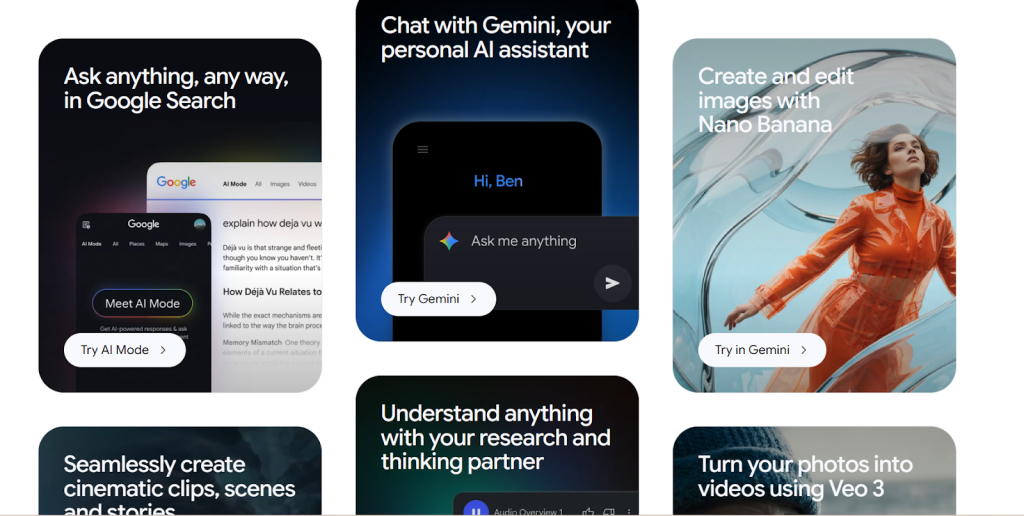
Search behaviour is shifting rapidly from traditional SERPs to AI-driven answer experiences, where tools such as Google’s AI Overviews, ChatGPT Search, Perplexity and Gemini deliver results as summaries, citations and conversational responses. This creates a new competitive landscape in which brands must optimise not only for keywords but for how AI systems interpret and represent information.
Generative Engine Optimisation and Answer Engine Optimisation focus on making content structured, fact-rich and semantically clear, increasing the likelihood that AI assistants select it for retrieval, citation or inclusion in summaries. High-performing teams now prioritise clean markup, strong topical authority, verifiable claims, concise definitions and transparent sources, all of which improve the chance of being surfaced inside AI-generated answers.
As this landscape becomes more complex, many organisations turn to specialised partners. GA Agency Generative Engine Optimisation and Answer Engine Optimisation services support this transition through structured data reviews, semantic content re-engineering and AI-assisted content optimisation frameworks that help brands secure visibility inside emerging answer engines.
While AI models handle retrieval, human expertise remains crucial in crafting authoritative content, validating factual accuracy and ensuring the brand is represented correctly when AI systems generate summaries or responses.
AI-Safe Content and Multi-Engine Measurement
As AI assistants increasingly mediate discovery, brands must ensure they are accurately and safely described by these systems. This includes creating structured content that reduces hallucination risk and using consistent product information, brand assets and claims that AI can verify across sources. Teams also need processes to monitor how answer engines represent their brand and correct inaccuracies where possible.
Marketers must adapt measurement, budgeting and KPI frameworks to a multi-engine ecosystem that spans traditional search, AI summaries, conversational results and visual search outputs. Success is no longer defined only by rankings but by visibility inside AI-generated answers, the quality of citations and the degree to which the brand is included in high-intent information paths.
Human oversight ensures that optimisation efforts stay aligned with brand voice, legal standards and customer expectations while preventing AI-driven distortion or misrepresentation. This combination of AI-ready content, rigorous validation and the support of expert partners positions brands to grow within an environment where AI is now a primary gateway to information.
Predictive Personalisation Becomes the Default
Predictive Journeys Replace Rules-Based Personalisation
Personalisation is evolving from static, rules-based decision trees to predictive, propensity-led journeys that update in real time. Instead of manually defining segments or triggers, marketers are increasingly relying on models that learn from behaviour, context and historical data to determine the next best message, offer or experience. This shift mirrors wider industry movement toward dynamic decisioning, supported by insights from leading experience platforms such as Castle, which highlight the move from “if-this-then-that” logic to continuous prediction and adaptive journeying.
As these systems mature, they enable experiences that are more relevant, timely and tailored at an individual level. Yet despite the sophistication of predictive models, human judgement remains essential. Teams must refine decisioning logic, ensure fairness and guard against over-targeting that crosses into intrusive territory. The most effective organisations combine algorithmic intelligence with strategic oversight to deliver personalisation that adds value without compromising trust.
Real-Time Adaptation and Decision Ownership
Predictive personalisation relies on real-time signals that adapt content, offers and UX to micro-intent across web, app, email and emerging AI-led touchpoints. Customers increasingly expect this level of responsiveness, but only when it is accompanied by a transparent value exchange. Brands must clearly communicate how data is used and ensure that personalisation enhances experience rather than feeling exploitative.
With decisioning engines becoming more central, organisations must define clear ownership across marketing, CRM, data and product teams. This includes oversight of the models, ethical guardrails, creative quality and the customer experience they shape. When governed responsibly, predictive systems become a strategic asset that supports growth, retention and long-term loyalty by meeting customers with the right experience at the right moment, while respecting their privacy and expectations.
Paid Media Moves Toward Keywordless, Signal-Led Targeting
In paid media, personalisation is increasingly driven by broad-signal models rather than tightly curated keyword or audience lists. Platforms like Google, Meta and emerging retail media networks are prioritising “keywordless” strategies (such as Performance Max, AI Max for Search and automated audience expansion) where machine-learning systems infer intent from behavioural, contextual and conversion signals at scale.
This represents a decisive shift away from granular manual optimisation toward channel strategies powered by platform-level intelligence. To remain competitive, marketers must adapt by feeding higher-quality creative, first-party data and conversion signals into these systems, while establishing governance frameworks that ensure spend efficiency and brand alignment.
This evolution reinforces the need for skilled practitioners who understand how to influence algorithmic models, ensuring paid media remains a high-performing engine within the wider predictive personalisation ecosystem.

First-Party Data and Privacy-First Growth
Regulation, Enforcement and Turning Privacy Into Advantage
New privacy regulations continue to evolve, with increased enforcement of consent violations, dark-pattern design practices and improper data use. Recent reporting from Reuters signals a growing volume of class actions, regulator scrutiny and penalties, making privacy not only a legal requirement but a strategic risk factor.
The organisations most prepared for 2026 treat privacy as a competitive advantage, not a compliance burden. They build transparent data practices, invest in privacy-safe analytics and communicate clearly with customers about how data enhances their experience. When done well, privacy-first strategies strengthen brand trust, improve deliverability, support channel efficiency and fuel more reliable personalisation models.
This shift positions first-party data and privacy-first design as core commercial drivers. Brands that invest early gain cleaner datasets, stronger authority and more resilient performance across paid and owned media, while those that delay face shrinking addressability and increasing regulatory exposure.

Conversational Commerce and AI Agents
AI Agents for Sales, Service and Product Discovery
Conversational interfaces are moving far beyond simple chat widgets. Advances in large language models, speech recognition and agentic automation are enabling AI-powered sales and service agents that can guide users through product discovery, answer questions, recommend solutions and support transactions in real time. This shift reflects wider industry trends highlighted across platforms, which point to the rise of voice search optimisation and natural language interaction as expectations become more conversational.
These agents now operate across multiple touchpoints including site chat, messaging apps, smart speakers and in-app experiences. They help brands deliver consistent, responsive and context-aware support while freeing human teams to focus on high-value interactions. Yet quality still depends heavily on human design, training and oversight. Organisations must define tone, guardrails and escalation paths to prevent inaccurate or unsafe responses, ensuring AI augments rather than replaces expert-led service.
Retail Media, Shopping Agents and New Conversion Paths
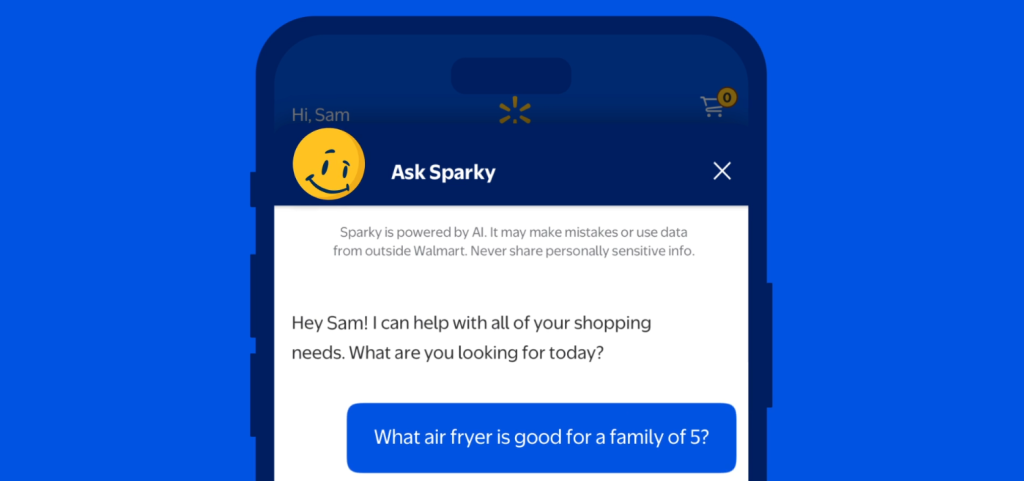
The boundary between discovery and purchase continues to narrow as retail media networks, shoppable surfaces and AI shopping agents reshape modern commerce. A recent Wall Street Journal report details how Walmart is already testing advertising within its AI shopping agent “Sparky”, signalling the rapid rise of AI-driven buying assistants and their influence on product visibility and consumer choices.
These systems compare products, summarise reviews and guide purchasing decisions from a single query. To remain visible and accurately represented, brands must prepare AI-ready commerce structures that include high-quality product data, structured metadata and consistent information across platforms.
Marketers also need measurement frameworks that capture the value of agent-led discovery, which often bypasses traditional click paths and attribution models. Human teams remain essential to validate product data, monitor how AI agents describe the brand and ensure sponsored prompts or retail media placements adhere to legal and brand standards.
Brands that invest in clean, structured data and trustworthy messaging will be best positioned as AI agents become a central gateway for product discovery and conversion.
Content Supply Chains and Creative Automation
Industrialising Creative Production With Generative Tools
Creative production is shifting from craft workflows to industrialised content supply chains powered by generative AI. What once required multiple teams, long timelines and sequential approvals is increasingly supported by automated content engines that generate, version, localise and optimise assets at scale. Industry discussions across innovation hubs highlight how AI-driven creative systems enable brands to build and adapt content libraries at speed, supporting rapid testing and format diversification.
Short-form video remains the dominant format for social and performance channels, while shoppable video, live commerce and platform-native formats provide new conversion surfaces. Generative tools help teams produce large volumes of video and display variations, adapt creative for different cultural and market contexts and refresh assets continuously based on real-time performance.
Yet even as automation accelerates production, human input remains essential. Creative directors, editors and brand guardians shape the core ideas, validate cultural nuance and refine final outputs to ensure that automated content still reflects authentic brand expression and strategic intent.
Governance for Brand Voice, Rights and Synthetic Talent
Scaling creative automation requires robust governance. As brands adopt AI to generate imagery, video, synthetic presenters and localised content, the risks around brand voice consistency, IP rights and talent usage increase. Teams must define clear rules for prompts, visual identity, tone, linguistic style and scenario boundaries to ensure AI outputs align with standards.
Synthetic talent introduces additional considerations. Organisations need structured processes to manage usage rights, likeness approvals, spokesperson oversight and regulatory compliance, especially in markets with stricter advertising rules. Human review checkpoints are essential to maintain accuracy, avoid cultural missteps and prevent misuse or unverified claims.
Forward-thinking brands are establishing cross-functional collaboration models where creative, media, product and data teams work together in unified production flows. This integrated operating model ensures that automation is used responsibly, creative remains strategically grounded and new video formats are deployed with both speed and control.

Omnichannel Experiences Go Real-Time
Adaptive Interfaces and Unified Customer Identity
Digital experiences are no longer static. Modern organisations are moving toward unified commerce models in which front-end and back-end systems are tightly integrated — enabling a seamless user experience across channels, devices, and purchase touchpoints. According to a 2025 perspective from Deloitte “Unified Commerce: Transforming the Retail Landscape,” unified commerce enables consistent product information and customer data across channels, thereby empowering retailers to deliver cohesive and frictionless experiences.
This unified architecture supports real-time adaptation: as customers shift from mobile to desktop to in-store, their identity and contextual data remain persistent, allowing personalisation and continuity. This shift is fundamental for brands seeking to meet modern expectations: customers expect seamless journeys, not segmented channel experiences.
Experimentation and Operational Foundations
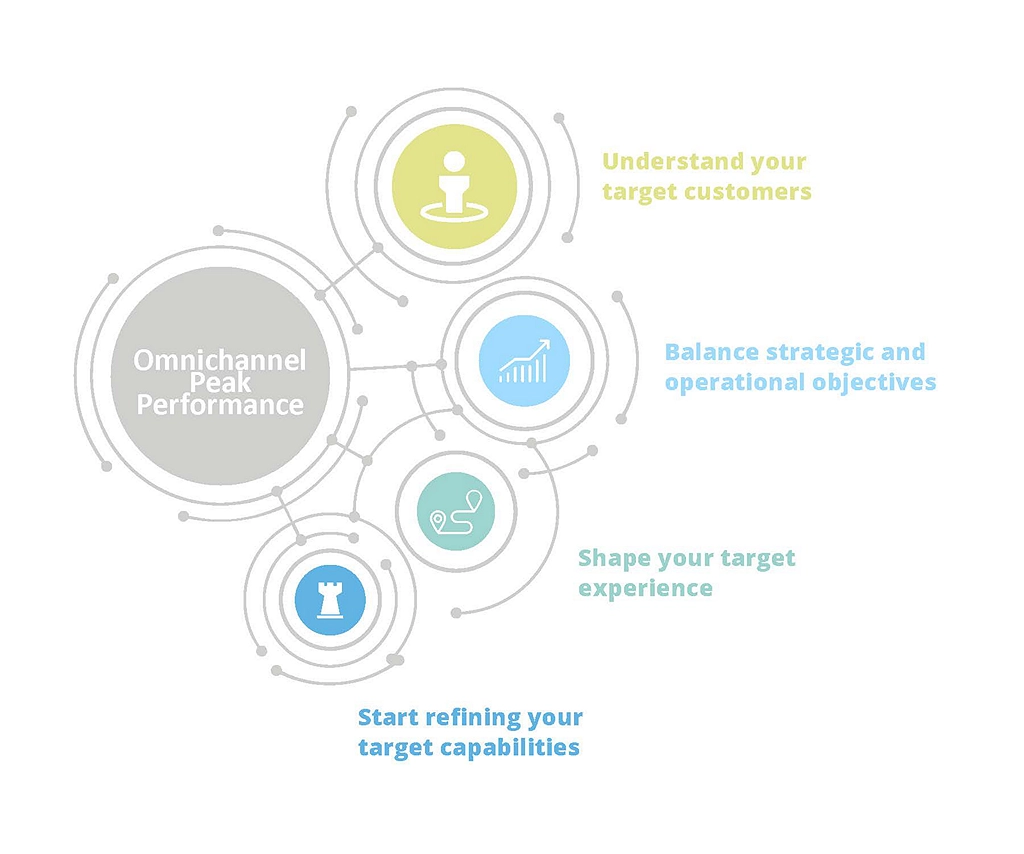
Delivering adaptive, cross-channel experiences depends on constant experimentation and iteration. According to the 2025 report “Omnichannel Peak Performance” by Deloitte Digital, the rapid online growth and evolving consumer behaviour have turned omnichannel and unified commerce from optional strategies into essential operational frameworks for many businesses.
To support real-time adaptation and personalisation, organisations need infrastructure that can handle data flow, identity resolution and cross-channel orchestration — combining technology platforms, data teams and creative/media teams under a unified approach. Without this, customer journeys become fragmented and inconsistent, undermining the benefits of omnichannel capabilities.
Brands that invest in unified commerce infrastructure and robust orchestration frameworks are best placed to deliver frictionless user journeys, improved conversion, stronger retention and scalable personalisation.
Platform-Led Ecosystems Reshape Digital Strategy
Competing Inside Closed, AI-Driven Media Ecosystems
Digital marketing in 2026 is increasingly shaped by a handful of dominant, closed ecosystems. Platforms such as Meta, Google, TikTok and Amazon now offer tightly integrated environments combining ads, commerce, analytics, content creation tools and AI agents. The result is a shift in how brands plan and execute campaigns: strategies must be designed to perform within each platform’s unique AI, data signals, formats and discovery surfaces.
These ecosystems are evolving rapidly. Google is pushing deeper into AI-powered search experiences, TikTok is expanding its commerce and recommendation engine, Meta continues to invest in AI agents and automation, and Amazon’s retail media network is becoming a central driver of performance and product visibility.
Brands that succeed in this environment treat platforms not as generic media placements but as distinct operating systems. They tailor creative, targeting, user journeys and conversion paths to each platform’s logic, while ensuring human oversight to validate AI-driven recommendations and outputs.
Adapting to Platform Policies and Commercial Models
Each major platform now has its own native optimisation rules, attribution signals and creative requirements. As AI shapes how ads are delivered, discovered and ranked, marketers must refine strategies to align with platform-specific algorithms rather than relying on universal best practice.
This includes creating platform-native creative, integrating with commerce surfaces like Shops or Amazon Stores, leveraging advanced formats such as TikTok Spark Ads or Meta Advantage+ and understanding how each ecosystem handles intent, interest signals and AI-driven personalisation.
The rise of platform-led ecosystems also increases the need for operational agility. Teams must adapt budgets quickly, test formats continuously and evaluate performance inside each walled garden while ensuring compliance with platform policies and maintaining brand integrity.
Brands that master these dynamics build more resilient, high-performing strategies by aligning to platform realities instead of fighting against them — combining AI-driven efficiency with human strategic control.
Success requires strong operational discipline. Teams must set clear experiment standards, ensure data cleanliness, define governance for test validity and align leadership expectations around probabilistic truth rather than exact user paths. When done well, this approach produces more accurate investment decisions, greater channel resilience and significantly improved marketing efficiency.

Trust, Ethics and Responsible AI
Managing Bias, Explainability and Risk
As AI becomes embedded in every stage of the marketing lifecycle, brands face growing pressure to ensure that models are fair, explainable and safe. Research communities continue to highlight risks linked to algorithmic bias, opaque model behaviour and inconsistent decisioning across demographic groups. These risks are not abstract. They can shape who sees an offer, how pricing is personalised, or which creative is served — with direct commercial and reputational consequences.
In 2026, responsible AI is becoming a strategic requirement, not an ethical add-on. High-performing organisations are implementing explainability standards, reviewing training data sources and documenting potential bias vectors in both generative and predictive workflows. Human oversight plays a central role. Teams evaluate outputs, correct unsafe or inaccurate responses, and ensure AI systems behave in alignment with brand values and regulatory expectations.
This shift reflects a wider truth: trust is now a competitive differentiator. Customers and regulators expect brands to use AI transparently, fairly and accountably, particularly as automation touches more stages of the customer journey.
Governance, Transparency and Accountability
With AI adoption accelerating, brands are establishing formal governance structures to maintain safety and compliance. This includes AI councils, cross-functional review groups, risk assessments, and clear policies governing data use, prompt libraries, automated decisioning and escalation processes. Organisations are increasingly building audit trails that document how models are trained, how outputs are validated and how decisions are made at scale.
Transparency is equally important. Customers need to understand how AI influences the experiences they receive, and regulators are intensifying scrutiny of automated targeting, personalised pricing and data-driven decision-making. Leading organisations respond by communicating clearly about data use, providing opt-outs where appropriate and ensuring that AI-driven personalisation never crosses into manipulation or discriminatory practices.
The brands that thrive in 2026 will be those that balance automation with accountability. They harness the efficiency and scale of AI while ensuring decisions remain grounded in human judgement, ethical design principles and clear governance. The result is a marketing system that is not only more effective but also more trustworthy, resilient and aligned with long-term brand reputation.

Cross-Border Digital Growth and Localisation at Scale
Marketplace Expansion and AI-Assisted Localisation
Global growth in 2026 is increasingly shaped by platform-led ecosystems, where marketplaces, retail media networks and AI-driven discovery systems determine visibility in new regions. Expanding internationally is no longer just about entering a market. It requires navigating platform rules, ranking systems, product data requirements and commercial models that differ widely across countries.
Retail media networks such as Amazon, Walmart Connect, Mercado Ads and Carrefour Links now function as essential gateways to regional customer bases. Each ecosystem has its own ad formats, optimisation signals and compliance expectations, which means brands must adapt strategies market by market. At the same time, AI-driven shopping agents and regional search platforms amplify the importance of structured data, accurate catalogues and locally relevant creative.
AI is also reshaping localisation. Brands increasingly use AI-assisted workflows to generate local language copy, cultural adaptations, UX variations and market-specific creative, which are then refined by human editors to ensure accuracy and nuance. As an international digital marketing agency with 18+ native languages in-house across SEO, GEO and paid media, we see first-hand that combining AI efficiency with native expertise is now the operational standard for successful global expansion.
Regulations, Market Differences and Operating Models
Cross-border growth is complicated by fragmented regulatory environments, from data protection and consent frameworks to differing tax rules and advertising policies. Privacy requirements across the EU contrast with markets in APAC or MENA, while consumer protection rules in the US or LatAm add further complexity. High-performing organisations build country-level compliance playbooks, enabling their teams to adapt quickly to local constraints while maintaining global standards.
To scale effectively, global brands are restructuring around hybrid operating models. Many adopt a hub-and-spoke approach, where central teams define strategy, governance and shared tooling, while regional experts tailor execution to cultural norms, competitive dynamics and platform behaviours. Others use networked models, sharing learnings and AI-driven insights across regions to accelerate performance.
Success in 2026 comes from blending global coherence with local precision. Brands that invest in native-language localisation, market-specific data, regulatory readiness and culturally relevant creative consistently outperform those relying on one-size-fits-all assets. AI speeds up the work, but human cultural oversight remains essential to maintain authenticity, compliance and brand integrity in every market.
What High-Performing Teams Will Do Differently in 2026
Build the Right Capabilities
The most successful organisations in 2026 are those that invest early in the capabilities needed to operate in an AI-driven, privacy-first and platform-dominated landscape. They prioritise first-party data quality, invest in AI governance frameworks and develop cross-functional operating models that unite creative, media, data and product teams around shared growth objectives.
These teams are also deliberate about developing human expertise alongside automation. They upskill staff in prompt design, AI orchestration, decisioning strategies, platform-native creative and international compliance. They create clear playbooks for AI-assisted workflows while ensuring that final judgement, refinement and brand protection remain in human hands.
High-performing organisations recognise that future advantage comes from people who can partner intelligently with AI systems, not from automation alone.
Know What to Pilot, Scale and Stop
Top teams treat 2026 as a year of strategic focus, not unchecked experimentation. They establish a clear roadmap that defines:
- What to pilot: emerging tools such as agentic workflows, GEO/AEO optimisation, AI-assisted localisation and new short-form commerce formats
- What to scale: high-performing creative automation, predictive personalisation, platform-native campaigns and unified measurement frameworks
- What to stop: outdated manual processes and excessive channel fragmentation
Leadership plays a crucial role in this transition. Instead of asking for perfect precision or legacy metrics, senior teams measure progress against capability maturity, operational speed, data readiness, creative effectiveness and international scalability.
By focusing on what truly moves the needle, these organisations build resilient, future-ready growth engines that can adapt to AI’s rapid evolution and the changing expectations of global customers.
Key Takeaways
- AI is now the marketing operating system, powering everything from creative production to personalisation, planning and optimisation. Human oversight remains essential for accuracy, governance and brand integrity.
- Search is transforming into AI-led discovery, making GEO, AEO and structured, fact-rich content critical for visibility inside answer engines and AI summaries.
- Predictive personalisation is becoming the default, with real-time decisioning and micro-intent shaping experiences across channels, supported by transparent value exchange.
- First-party data is the backbone of growth, as privacy requirements tighten and clean rooms, consented identity and server-side tracking become standard.
- Conversational commerce, voice journeys and AI agents are reshaping discovery and service, creating new pathways to conversion that require structured data and careful brand governance.
- Content supply chains are industrialising, with generative tools enabling rapid creative iteration while human editors ensure cultural nuance, brand safety and distinctiveness.
- Omnichannel experiences are shifting to real-time adaptation, supported by unified identity, continuous experimentation and integrated experience operations.
- Platform ecosystems dominate digital strategy, requiring brands to optimise for the rules, data signals and commercial models of each closed, AI-driven environment.
- Responsible AI is now a commercial imperative, with organisations formalising governance, explainability and audit trails to manage bias, trust and regulatory expectations.
- Cross-border growth demands precision localisation, regulatory fluency and native expertise. AI accelerates localisation, but human cultural knowledge remains the deciding factor in quality.
Transform Your Digital Marketing Strategy for 2026 and Beyond
The pace of change across AI, privacy, platforms and global consumer behaviour makes 2026 a pivotal year for digital leaders. The organisations that will succeed are those that take a structured, capability-led approach: strengthening data foundations, operationalising AI responsibly, and aligning teams around a unified vision for growth.
If you are reviewing your strategic priorities or planning the next phase of your transformation journey: Contact us to discuss your objectives and explore how we can support your long-term digital agenda.
The next era of marketing belongs to organisations that act with clarity, discipline and ambition. Now is the moment to set that direction.

Article author

Chiara Riva
Business Development Assistant