
















Table of Contents
Introduction
Artificial Intelligence has moved beyond being just a futuristic concept in digital advertising – it’s now the foundation of how brands connect with consumers, tailor campaigns, and maximise performance. In the last few years, AI has automated many aspects of paid media, from real-time bid adjustments to predictive audience segmentation. But in the coming months, AI is going even further, not just improving efficiency but redefining the very nature of digital advertising.
The shift is happening fast. The market size of generative AI in marketing is expected to grow from $1.9 billion in 2022 to $22 billion by 2032, a staggering increase that reflects its deep integration into advertising strategies (Statista, 2024) . With Google’s Search Generative Experience (SGE) redefining search advertising, Meta’s AI-driven Advantage+ campaigns automating audience targeting, and AI-generated ad creatives becoming more sophisticated, we are entering a new era where artificial intelligence is at the heart of every successful paid media strategy.
However, while AI is making advertising more precise and scalable, it also raises new challenges around data privacy, bias, and the role of human oversight. This article explores how AI is transforming paid media, the challenges that come with it, and what the future holds for AI-driven advertising.
The Rise of AI in Paid Media
A decade ago, digital advertising relied heavily on manual processes. Marketers would select keywords, adjust bids, test creatives, and analyse performance reports to refine their strategies. AI has fundamentally changed that approach. Today, AI-powered algorithms handle real-time bidding, budget allocation, audience segmentation, and even content creation, freeing up marketers’ time to focus on strategic decisions rather than operational tasks.
The appeal of an AI-driven paid media strategy is simple: it increases efficiency, reduces waste, and enhances targeting precision. AI can process vast amounts of data in real time, allowing advertisers to identify patterns that humans may miss. A person managing a Google Ads campaign might take weeks to optimise bidding strategies based on historical data, while AI can analyse thousands of variables and adjust bids instantly at the auction-level to maximise conversions.
But the real game-changer is AI’s ability to understand user intent. Traditional advertising relied on demographic and interest-based targeting, but AI-driven campaigns can now predict purchasing behaviour based on real-time interactions, engagement signals, and even subtle online behaviours. The difference is profound – AI doesn’t just show ads to the right people; it allows you to target them at the right moment, with the right message, optimised for the highest chance of conversion.

Picture by BrianPenny from Pixabay
Key AI Innovations Transforming Paid Media in 2025
The role of artificial intelligence in paid media has evolved far beyond automation – AI is now actively shaping how brands create, distribute, and optimise their advertising. In 2025, AI isn’t just streamlining processes; it’s redefining how advertisers approach targeting, bidding, and audience engagement.
The key AI-driven innovations transforming paid media this year are generative AI for ad creation, predictive audience segmentation, smart bidding, AI-powered fraud prevention, and the rise of AI-driven search engines like ChatGPT SearchGPT, which have the potential to reshape search behaviour and advertising strategies. These advancements are not only increasing efficiency but also creating new challenges and opportunities for marketers who must adapt to the shifting digital landscape.
AI Powered Ad Creation & Copywriting
One of the most noticeable shifts in 2025 is the role of AI-generated ad creatives. Platforms like Meta’s Advantage+ Creative and Google’s Performance Max are taking traditional A/B testing to another level, automatically generating multiple variations of ad copy, images, and videos and optimising them based on engagement data.
AI-generated content is no longer generic or robotic. Generative AI tools like ChatGPT, Gemini, and Claude can now produce high-quality, contextually relevant ad copy that feels natural and persuasive. Meanwhile, AI-powered design tools are creating video ads from simple text prompts, drastically reducing production costs. Advertisers who once needed large creative teams can now produce and test ad creatives at scale, allowing for more personalised and data-driven storytelling.
Adapt your Paid Media Strategy for an AI-driven future! Contact us today to optimise your content and plan your next steps toward digital growth in 2025.
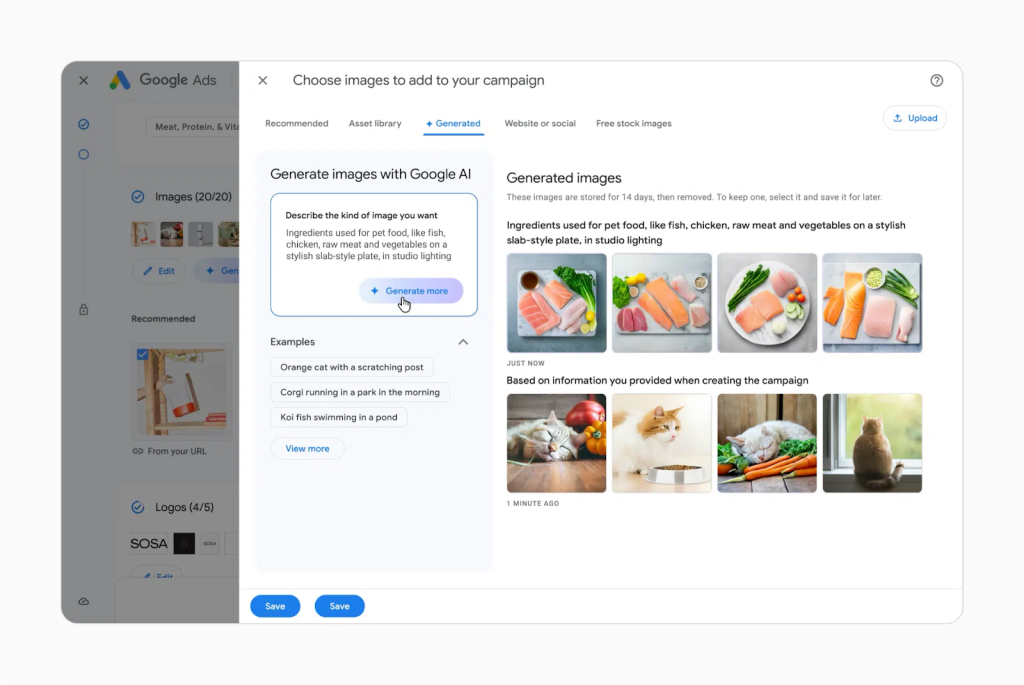
Image from Search Engine Land
Predictive Audience Targeting & Hyper-Personalisation
One of AI’s most powerful contributions to paid media is its ability to anticipate user behaviour. Instead of relying on static audience segments, AI-powered algorithms continuously update and refine audience profiles based on real-time engagement.
Predictive analytics allows advertisers to identify potential buyers before they even express interest, using machine learning models trained on browsing history, past purchases, and behavioural cues. This level of hyper-personalisation means that ads are no longer just targeted based on demographics but on actual intent and likelihood to convert.
AI is also making ad personalisation more dynamic. Instead of serving a single ad version to an entire audience, automation can adjust the headline, copy & imagery for each individual viewer, ensuring that every impression is as relevant as possible.
Top of Search. Top of Mind. Capture high-intent customers with tailored PPC strategy.
The Impact of AI Powered Search on Paid Media
Perhaps one of the most disruptive AI-driven shifts in paid media is the emergence of AI-powered search engines like ChatGPT’s SearchGPT, which is reshaping how users discover information and interact with brands online.
According to a Semrush study, referral traffic from ChatGPT has tripled between July and November 2024, indicating that users are increasingly turning to AI-driven platforms rather than traditional search engines for answers. Unlike conventional search engines, where users typically type short queries, ChatGPT search behaviour is more conversational, longer, and context-driven. This means that the way ads could be positioned and structured within AI-driven search ecosystems is fundamentally different from traditional PPC search ads.
Moreover, 70% of ChatGPT’s queries differ significantly from traditional search engine patterns, which suggests that advertisers must rethink how they optimise for AI-powered search engines (Semrush, 2025). Traditional keyword bidding strategies may no longer be as effective, and advertisers must focus on natural language optimisation and conversational search intent to stay competitive.
Another critical insight from the study is the demographic shift in search users. ChatGPT search has a higher percentage of younger users compared to Google’s broader user base. This presents a new opportunity for brands to target a younger, more AI-native audience through paid media strategies that are aligned with how they interact with AI-driven search engines.
For paid media specialists, the rise of ChatGPT could indicate a shift toward AI-optimised ad placements, which will likely involve integrating paid search with conversational AI experiences, rethinking ad creatives that fit within chatbot-driven interfaces, and ensuring that advertising remains relevant within AI-powered search journeys.
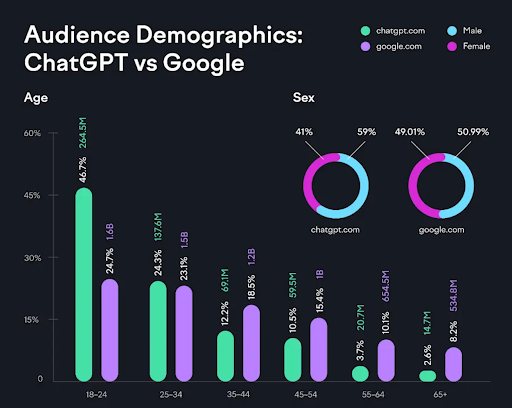
Image by SemRush
AI-Driven Bid Optimisation & Budget Allocation
Smart bidding strategies have been around for years, but in 2025, AI has refined them to an extraordinary degree. Google’s Target ROAS and Maximise Conversions bidding models are now optimising not just for direct conversions but for customer lifetime value (LTV), identifying which users are most likely to bring long-term revenue.
AI for Fraud Detection & Brand Safety
With the rise of AI-driven advertising, fraudsters have also become more sophisticated. Click fraud, bot traffic, and fake impressions continue to cost advertisers billions every year. Fortunately, AI is also playing a major role in fraud prevention and brand safety.
The emerging AI-powered tools use machine learning to detect and block fraudulent clicks in real time, ensuring that advertisers only pay for legitimate engagement. Additionally, AI-powered content analysis can help to avoid ads being placed on inappropriate or low-quality websites, protecting brand reputation
Boost Your Rankings & Revenue. Scale your brand with data-driven Amazon ads.
The Challenges & Ethical Concerns of AI in Paid Media
While AI is transforming advertising, it also brings new challenges and ethical concerns.
One of the most pressing issues is data privacy. With regulations like GDPR and CCPA tightening restrictions on data collection, AI-driven targeting is becoming more complex. Advertisers must now balance the power of AI-driven personalisation with the responsibility of protecting consumer data and maintaining transparency.
Another major concern is AI bias. Since AI learns from historical data, it can sometimes reinforce biases in ad delivery. If an AI model is trained on biased datasets, it may unfairly prioritise certain audience segments while excluding others. Advertisers need to actively monitor and audit AI algorithms to ensure ethical and inclusive ad targeting.
Lastly, the increasing automation of paid media raises questions about human oversight. While AI-driven campaigns can run with minimal intervention, strategic thinking and creative direction must still come from humans. The best-performing advertisers in 2025 will be those who use AI as an enabler, not a replacement for human expertise.
The Future of AI in Paid Media: What’s Next?
Looking ahead, AI’s influence on paid media is only set to grow. The next wave of innovations will focus on autonomous advertising systems, where AI not only optimises campaigns but creates, tests, and scales them without human input.
We will also see AI-powered multimodal advertising, where AI generates fully interactive ads that combine text, visuals, video, and even augmented reality (AR), offering users a richer and more immersive experience.
However, as AI becomes more powerful, the industry must also prepare for increased scrutiny and regulation. Striking the right balance between automation, personalisation, and ethical responsibility will define the future of AI-driven advertising.
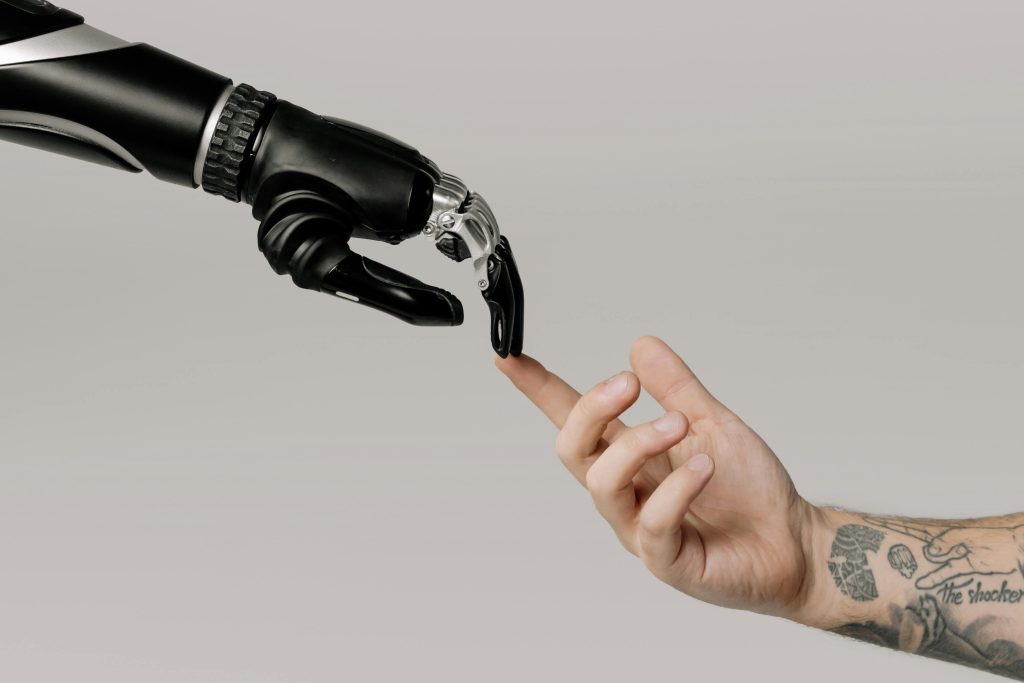
Image by cottonbro studio from pexels
Conclusion
AI and automation have become the backbone of paid media, transforming how brands create, target, and optimise their campaigns. From AI-generated ad creatives and predictive targeting to autonomous bidding and AI-driven search, the landscape of digital advertising is evolving at an unprecedented pace.
As we move further into 2025, the rise of AI-powered search engines, hyper-personalised ad experiences, and multimodal content generation signals a fundamental shift in how users interact with ads. Traditional strategies, particularly in search and display advertising, must adapt to this new era of conversational, intent-driven, and AI-optimised marketing.
However, as AI’s role expands, so do challenges around data privacy, ethical AI use, and the balance between automation and human oversight. While AI can predict trends and automate decision-making, human creativity, strategic thinking, and ethical responsibility remain irreplaceable.
The brands that will succeed in this AI-driven future are those that embrace innovation while maintaining transparency and consumer trust. AI is not just shaping paid media—it is redefining the entire advertising landscape. To stay ahead, marketers must remain agile, experiment with AI-powered tools, and rethink their approach to targeting, content creation, and audience engagement in a rapidly evolving digital world.
Stay ahead in the evolving digital landscape. As search trends shift and AI reshapes the game, having the right digital marketing strategy is key. Our expert team helps brands optimise content, localise strategies, and maximise visibility worldwide. Let’s connect and build your global digital success for 2025 and beyond!

Article author

Chiara Riva
Business Development Assistant