

















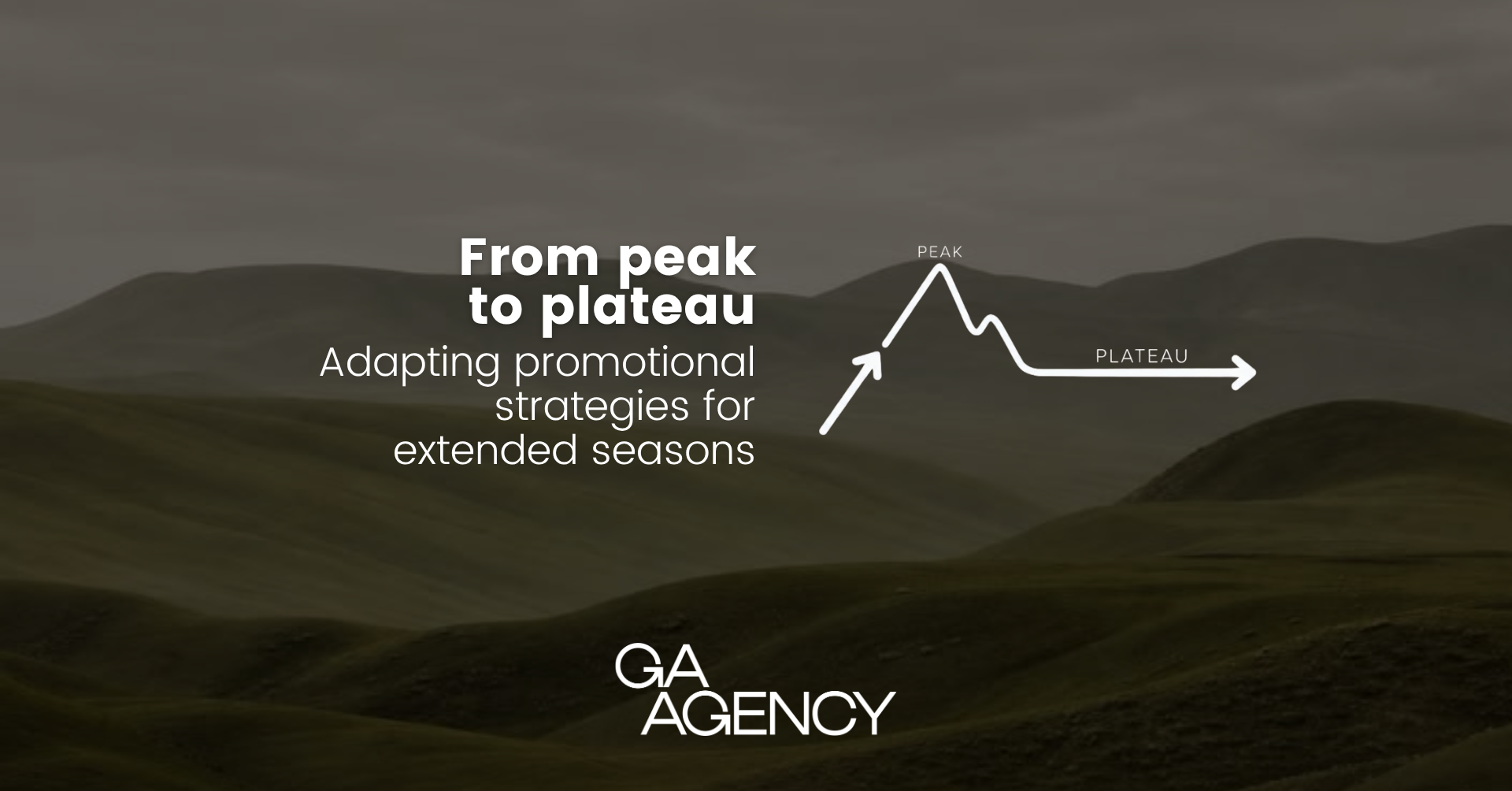
Across Europe, Black Friday now starts much earlier than the actual day. In Denmark, a quarter of online shops running Black Friday had offers live from November 1st, according to trade body Dansk Erhverv. In the UK, 58 top retailers had campaigns live at the beginning of the month last year, up from 12 in 2021. Most peak planning for 2026 assumes shoppers moved with them.
The data, however, says that the real story is a little more nuanced. Danish Black Friday still processed 6.1 times the transactions of an average Friday on Adyen’s data. Dutch shoppers peaked closer to payday than to Black Friday itself and in Spain most “deals” turned out not to be deals at all. As a recent analysis in The Checkout argued, the plateau belongs to retailers; demand kept arriving in spikes, on each market’s own timetable.
That gap matters more than it looks and even more so for brands selling across several markets. When budgets, content and offers follow one promotional calendar and demand follows many local ones, every channel pays for the mismatch in a different way.
What the 2025 peak data shows
Early discounting did not create early demand. IMRG’s online retail index recorded year-on-year revenue of -1.6%, -0.2% and -1.9% across the first three weeks of November 2025, then -1.2% in Black Friday week itself. DataWeave, which tracked 71,642 UK products, found retailers had front-loaded their discounts well before Black Friday week.
Shoppers saw the deals and waited anyway. The BRC reported October’s weakest growth since May, with spending on toys, electronics and clothing held back. Barclays recorded November card spending down 1.1%, the steepest fall since February 2021 and attributed part of it to shoppers holding out for seasonal discounts.
Then the day arrived. Adobe measured Black Friday as the UK’s biggest online day of the year at £1.16 billion and Barclays saw transaction volumes rise 62.5%. The tail ran long: Boxing Day footfall rose 4.4%, its strongest growth in a decade and January retail sales grew 2.7% as shoppers held off for the sales.
The UK is the best-documented case, but the shape repeats. In the US, 63% of shoppers told the NRF in early October that they would do most of their holiday buying over Thanksgiving weekend, up from 59% a year earlier. Spain and the US spiked less sharply than Denmark, at 4.5 and 2.8 times an average Friday, but the spike was still there. In the Netherlands, the busiest day of the 2024 Black Friday period on iDEAL was Monday 25th November, around payday.
Spain adds a trust problem. Consumer group OCU tracked 2,475 electronics and appliance products and found only 9% were genuine bargains on Black Friday, whilst 37% cost more than their lowest price in September and October.
Why this should change how peak is planned
1. Paid Media: the auction follows the shopper, not the promotion
When campaigns go live on 1st November with conversion budgets set as if demand has already started, brands buy clicks from people who are comparing, rather than buying. Acquisition costs drift up across the plateau weeks, then budget caps and creative fatigue arrive just as genuine intent peaks.
The better split separates the jobs. Early November is for reach and audience building: prospecting, video and growing remarketing and customer-match pools. Conversion spend belongs on the days demand actually lands and smart bidding needs warning before it does. Google’s seasonality adjustments are designed for short, predictable events, which is exactly what the spikes are.
December and January are the other half of the plan. November non-converters are delayed and the December auction is typically less contested than Black Friday week.
A budget that is spent by Cyber Monday risks missing the second peak.
2. SEO: the waiting period is a research period
Shoppers who hold off are not inactive, they are searching for when a sale starts, whether a brand is taking part and how this year’s prices compare with last year’s. That research phase runs for weeks and much of it runs through search.
This is where SEO earns its place during peak. A permanent Black Friday or sale URL, refreshed each year, keeps the authority it has built and is indexed before demand starts. The same logic applies to Cyber Monday, the January sales and market-specific events such as Black Week in the Nordics or Singles Day in China.
Brands that own the research phase organically pay less to win the purchase phase in Paid search. Coordinating the two, so that Paid budget is not spent on queries the brand already wins organically, is expected to be one of the clearest efficiency gains of the season.
3. GEO: AI assistants are now part of the deal check
The question a waiting shopper asks has shifted from “what’s on sale?” to “is this actually a good deal?”. More of them now put that question to ChatGPT, Gemini or Google’s AI Mode, which compare products, prices and retailers in a single answer.
The OCU finding matters here. When more than a third of “deals” are priced above recent lows, comparison is exactly what shoppers and assistants will do. Price, sale price and availability need to match across the product feed, the product page and structured data. As OpenAI’s Agentic Commerce Protocol and Google’s Universal Commerce Protocol bring product discovery into the conversation, feed quality becomes a visibility lever in its own right.
There is a second point. When every retailer offers 20% off, an AI answer has little to tell them apart. An exclusive edition, early access for members or a limited run is a specific, citable fact. Differentiated offers are easier to surface than deeper discounts.
4. Measurement and markets: judge peak on the shopper’s timeline
If November investment is judged on November conversions, it will look like it failed. Demand built in the plateau weeks converts on Black Friday, in December and in the January sales, often through a different channel from the one that started it. Peak performance needs reading across the full November to January window, with attribution that sees across channels rather than crediting the last click.
The spikes are also local. Dutch shoppers time purchases around payday, Danish demand concentrates hard on the day and Spanish shoppers have reason to doubt the discount. A single peak calendar copied from the UK or US template could harm performance in markets that act differently.
What to do before the first November promotion goes live
- Finish the settings now. Tracking, server-side tags, product feeds, audiences and proven creative should all be working before November begins. Whatever is still broken at the start of the month rarely gets fixed during it.
- Split budget by job. Reach and audience building come first. Conversion spend is concentrated on the spikes, with a protected allocation for December and the January sales.
- Give waiting shoppers a reason other than price. Early access for existing customers, limited editions and member-only offers create urgency without training customers to wait, and they give search and AI surfaces something specific to show.
- Plan market by market. Map when each market actually buys, from payday cycles to Black Week and local sales events, then set budgets, content and feed updates to that calendar rather than the home market’s.
The brands that perform best this peak will be the ones whose budget, content and offer are in place at the moments shoppers decide to buy, in every market they sell in.
If you’re wondering how to manage peak planning at scale, that’s the conversation to have with us.
Sources
- Dansk Erhverv, Black Month er i gang (danskerhverv.dk, November 2025); The Checkout, Fallacy number 5001: Peak became a plateau. Shoppers didn’t get the memo (30 September 2026)
- IMRG, Peak 2025: early Black Friday insights revealed
- DataWeave, Black Friday 2025 UK: analysis of discount strategies
- BRC, Consumers hold back for Black Friday deals
- Barclays via FashionUnited, Card spending sees greatest fall since 2021 in November
- Adobe, UK online retail spending hits record high
- FashionUnited, Festive footfall sees year-on-year uptick
- The Industry Fashion, Retail sales pick up in January
- NRF, Holiday survey 2025
- Adyen, BFCM 2025 data
- iDEAL, Black Friday transactions 2024
- OCU, Black Friday 2025 price tracking

Article author