
















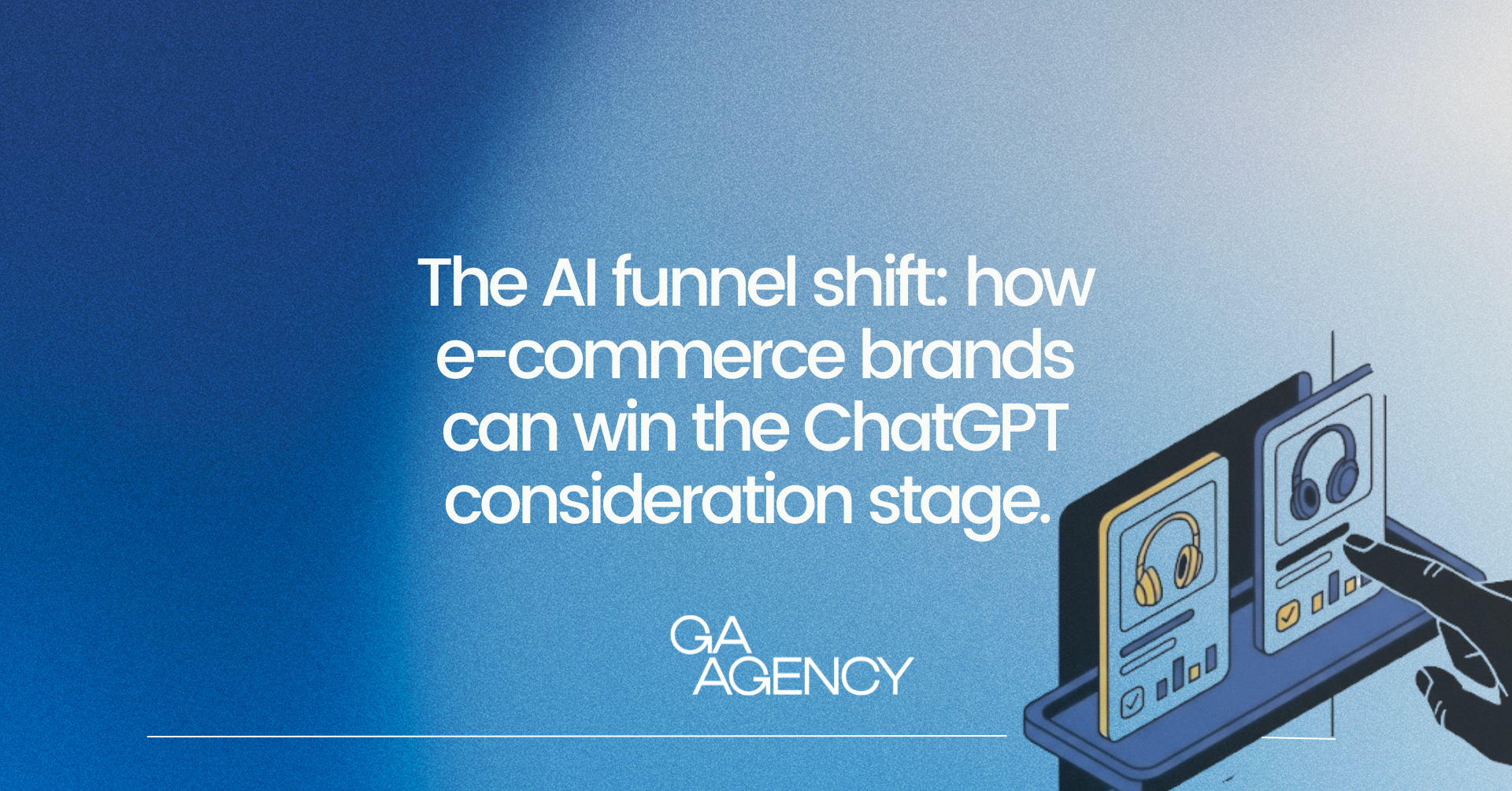
On 24 March 2026, OpenAI significantly upgraded ChatGPT’s commerce capabilities and shopping experience, introducing visual product browsing, side-by-side comparisons and conversational filtering, all powered by an expanded Agentic Commerce Protocol (ACP). More telling than what was added is what was removed: OpenAI stepped back from direct checkout functionality, repositioning ChatGPT explicitly as a discovery layer rather than a transaction platform. For e-commerce leaders, this distinction has real consequences for how brands invest in product data, attribution and channel strategy.
What ACP actually changes
ACP connects merchant product catalogues directly to ChatGPT, allowing the model to surface, compare and recommend products conversationally. In practice, this compresses what previously required multiple browser tabs and comparison sites into a single conversation. Target, Sephora, Nordstrom, Lowe’s, Best Buy, The Home Depot, Wayfair and Shopify merchants are already integrated. Rather than owning the purchase, OpenAI has designed the experience so that discovery happens inside ChatGPT and the transaction completes on the merchant’s own terms. Walmart’s integration, for example, routes users into a Walmart-controlled environment with its own account linking, loyalty programme and payment flow. The pivot wasn’t purely strategic. Walmart’s EVP Daniel Danker revealed that purchases made inside ChatGPT converted at roughly one-third the rate of users who clicked through and bought on Walmart.com. OpenAI acknowledged that Instant Checkout “did not offer the level of flexibility” it wanted. Merchants were also unwilling to cede customer relationships or transaction data to a third party. The result is a cleaner division of roles: ChatGPT owns the consideration stage; brands own everything that follows.
Why this should be on your e-commerce agenda
1. Product data has become a visibility lever
Visibility inside ChatGPT is not determined by bidding or by content authority but by the quality and completeness of a structured product feed. Titles, descriptions, images, pricing and availability attributes directly affect whether and how accurately these items appear in ChatGPT’s recommendations. Brands with incomplete or infrequently updated feeds will be invisible in this channel regardless of the strength of their paid or organic search presence. Feed quality is no longer a backend task for operations teams. It is a distribution question, and it belongs on the marketing leader’s agenda.
2. The measurement blind spot no one’s talking about
The more consequential implication of this change is measurement. There is varying levels of accuracy being reported from AI traffic – some are correctly coming through as Referrals, others, especially those using the free tiers of these products, are often registering in most analytics platforms as a direct visit, with no impression, no click and no prior session recorded. The commercial influence of the AI interaction is entirely invisible to existing reporting frameworks. This creates a blind spot: if reporting systems aren’t updated to track AI-assisted discovery, the data driving decisions on organic growth, channel mix and acquisition costs will be incomplete.
3. ChatGPT and Google are now competing
ChatGPT’s ACP is now competing directly with Google’s Universal Commerce Protocol (UCP), launched in January 2026 with co-development from Shopify, Walmart, Etsy, Wayfair and Target, and endorsed by over 20 partners including Visa and Mastercard. Both protocols are designed for AI-native commerce, not traditional search. The difference is infrastructure. Google’s UCP sits on top of its Shopping Graph, which indexes over 50 billion product listings and refreshes 2 billion of them every hour. OpenAI’s ACP relies on Stripe for payment infrastructure and merchant-submitted feeds for product data. One notable gap: Amazon blocks OpenAI’s crawlers entirely, meaning no Amazon products appear in ChatGPT Shopping, while Google has indexed Amazon listings for years. Shopify already supports both protocols, so a single product data strategy can serve both channels, but the feed requirements and optimisation priorities differ. Brands treating either integration as optional are ceding ground in a channel where early movers have an advantage.
Why it matters
The structural shift underway is not that ChatGPT has become a shop. It is that the pre-purchase consideration stage is migrating into AI interfaces that current measurement, content and commerce strategies were not designed to address. Brands that adapt early will benefit from cleaner data, stronger feed infrastructure and earlier presence in a channel that is growing. Those that wait will find the foundations harder and more expensive to build. Here’s where to start:
- Enrich your product feed: completeness across all ACP attributes (titles, descriptions, pricing, availability) is now required. Gaps hurt your visibility in ChatGPT’s recommendations.
- Prioritise ACP integration: connecting your catalogue (which can easily be done via providers like Shopify, Salesforce or Stripe) should be a priority, not a future consideration.
- Update attribution models: standard last-click reporting ignores AI-driven discovery. Adjust your frameworks to capture AI-assisted conversions and upstream consideration events.
If you’re running paid media or managing product feeds and haven’t stress-tested how AI-driven discovery affects your attribution and channel mix, that’s the conversation to have with us.
Original article: https://openai.com/index/powering-product-discovery-in-chatgpt/

Article author

Chiara Riva
Business Development Assistant