
















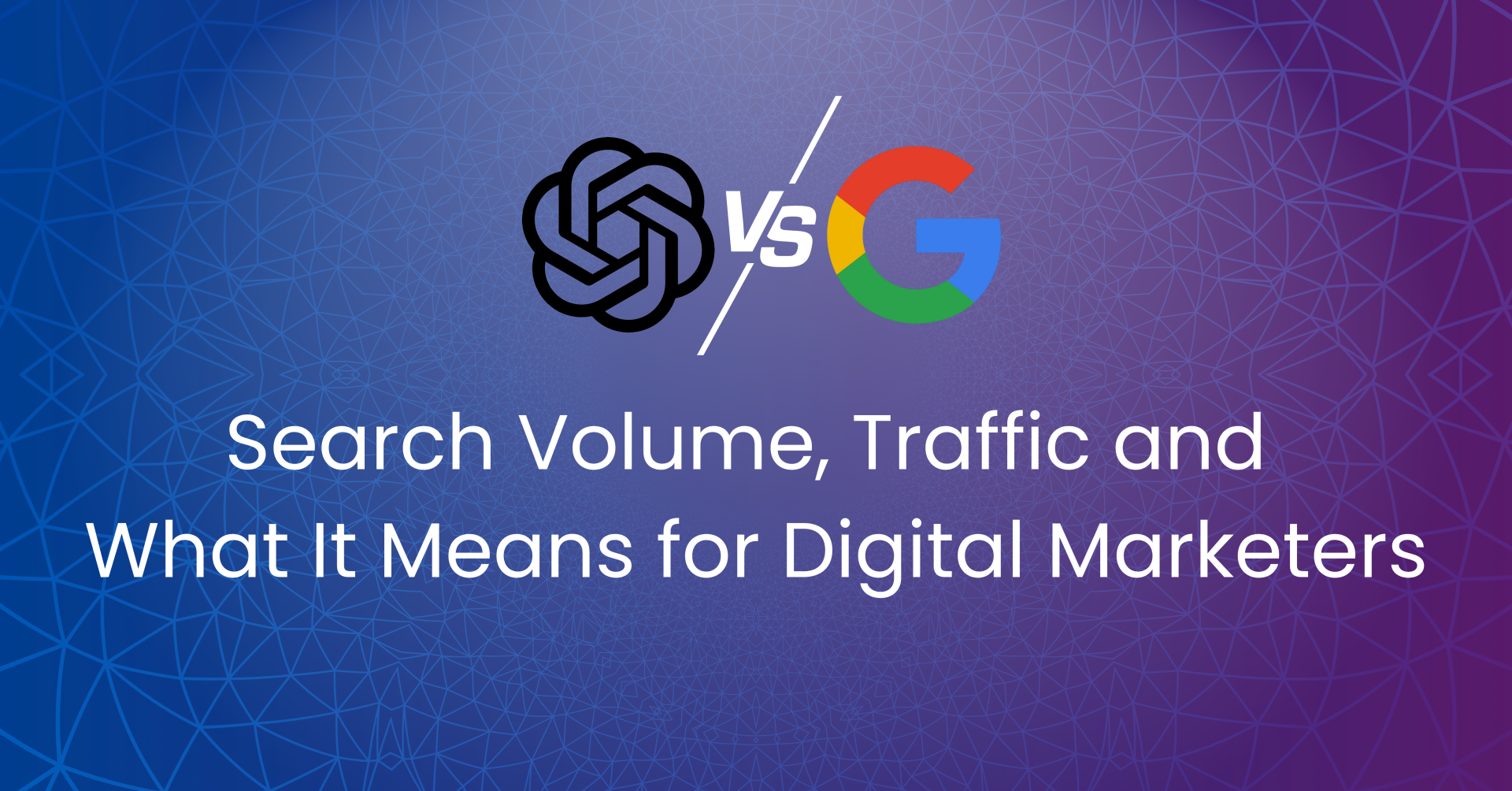
Is AI search replacing Google, or is it fundamentally reshaping how digital visibility works? As generative AI platforms like ChatGPT handle billions of prompts per day, marketers are beginning to question whether traditional search dominance is truly eroding. The latest Ahrefs data suggests the reality is more nuanced and strategically more important than the headlines imply.
The rise of generative AI has prompted fresh discussion about how people find information online, and whether tools like ChatGPT are starting to outpace traditional search engines in certain contexts. According to Ahrefs’ February 2026 analysis, while ChatGPT handles a meaningful share of search-like queries, the way users interact with it remains very different from how they use Google, with important implications for SEO and content strategy. Below, we break down search volume, referral traffic and click-through data from both platforms and explore what it means for digital marketers.
How Much Search Volume Does ChatGPT Actually Have?
The data shows ChatGPT processes around 2.5 billion prompts per day, which equates to roughly 12% of Google’s query volume for topics people traditionally search for.
This figure is meaningful because it reflects not just overall usage, but the volume of interactions that resemble search intent, such as fact-finding, problem-solving or decision support. It’s worth emphasising that these platforms have different business models and user behaviour patterns: ChatGPT retains users within a conversational interface, whereas Google’s search engine is built to connect users to external websites.
In practical terms, this means ChatGPT has emerged as a complementary channel for discovery, especially for informational and exploratory queries where users value context, summarisation and conversational interaction.
Data source: Ahrefs
The Traffic Referral Gap Remains Large
Despite ChatGPT’s prominent usage, the platforms diverge sharply in terms of traffic to websites. Data shows that Google’s traditional search remains vastly more effective at driving user visits to external sites, sending approximately 190 times more referral traffic than ChatGPT.
This difference is reflected in the estimated click-through rates (CTR) from each platform:
- Google’s CTR: Around 29% of search queries result in a click to a website.
- ChatGPT’s CTR: Approximately 1–3% of prompts lead to external clicks.
The underlying reason is straightforward: Google is designed to link users with sources, whereas ChatGPT’s conversational experience encourages users to obtain answers within the interface itself.
For content strategists and SEO specialists, this highlights a critical dynamic: even if AI tools account for significant query volume, the relationship with web traffic remains fundamentally different to that of search engines geared toward discovery and navigation.
Data source: Ahrefs
Insights from Traffic Channel Analysis
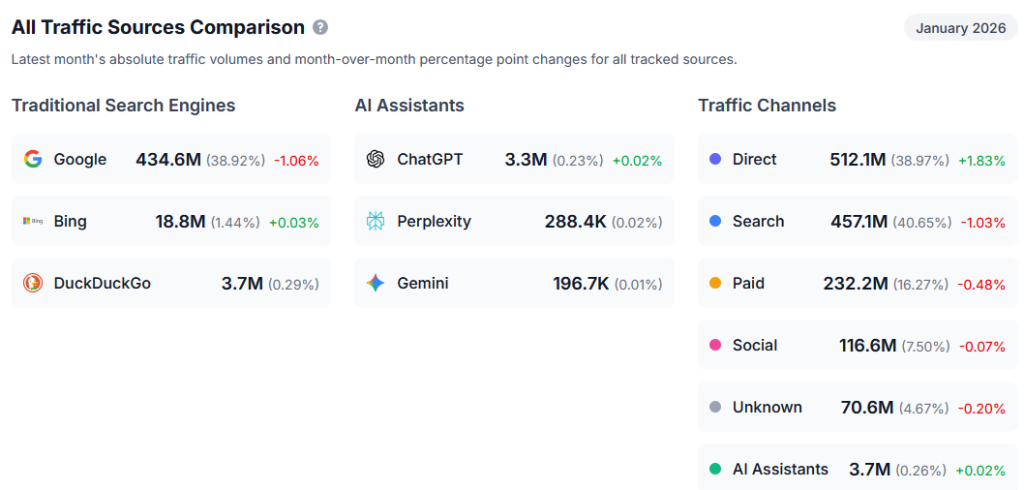
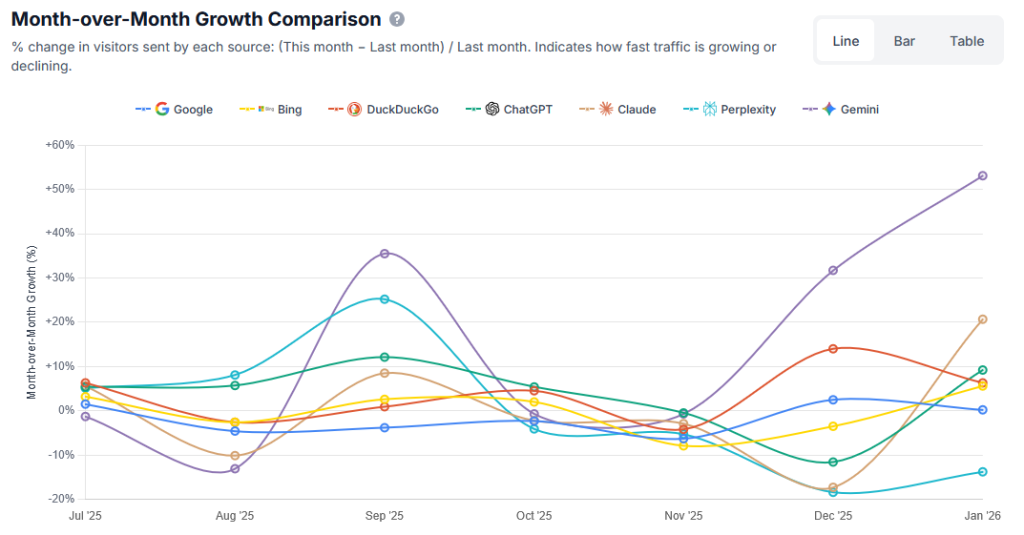
Analytics data from Ahrefs’ AI vs Search Traffic dashboard reinforces this distinction. Across tens of thousands of sites, Google continues to account for the lion’s share of referral traffic, while AI-driven channels such as ChatGPT represent a small but gradually growing percentage of total website visits.
This underscores a few strategic points:
- Google’s foundational role in discovery remains strong. Sites still depend heavily on search engine referrals for broad visibility and sustaining core traffic flows.
- AI channels are emerging as additional, complementary touchpoints. While small in scale today, the growth trend suggests progressive maturation of AI tools as discovery interfaces.
- Multi-channel optimisation, not replacement, is the near term reality. Marketers should prepare for ecosystems where users may begin their journey in AI and then navigate elsewhere, or cross-check between platforms, rather than choosing one at the exclusion of the other.
What This Means for SEO and Content Strategy
The divergence between query volume and referral traffic fundamentally reshapes how brands should approach digital visibility. AI interfaces are not replacing search engines, but they are redefining how discovery begins.
- Diversify Visibility Strategies
Google’s scale in both query volume and referral traffic means traditional SEO remains foundational. Technical optimisation, high-quality content and strong authority signals continue to drive sustainable performance.
However, visibility is no longer confined to the search results page. Brands must also consider how their content is interpreted, summarised and surfaced within AI-driven interfaces. Clear information architecture, structured content and authoritative positioning increase the likelihood of being referenced or cited in conversational environments.
- Optimise for AI Discovery Behaviour
AI tools reward clarity and entity strength. Unlike traditional search rankings, where position determines traffic flow, AI-generated answers synthesise information from multiple sources.
This shifts emphasis toward:
- Clear, well-structured answers
- Strong topical authority
- Consistent brand entity recognition
- Trust signals and citations
Brands that produce concise, factually structured content are more likely to be surfaced within AI responses, even if the resulting click-through behaviour differs from traditional search.
- Understand User Intent Nuance
The rise of ChatGPT has amplified attention on intent understanding. While AI tools excel at summarising and synthesising information, they are less effective at driving traffic. Marketers should therefore distinguish where AI aids early exploration versus where search drives actionable engagement, and tailor content and campaign strategies accordingly.
- Adjust Attribution and Measurement
If AI platforms retain users within their interface, click-based attribution alone will underrepresent visibility impact. Marketing teams should begin evaluating how conversational exposure influences assisted conversions, brand recall and cross-channel journeys. The shift is not purely about traffic. It is about influence within earlier stages of decision-making.
Data source: Ahrefs
Conclusion
The comparison between ChatGPT and Google paints a nuanced picture rather than a binary contest. ChatGPT now handles a notable share of search-like interactions, yet Google’s dominance in driving web traffic remains unrivalled at this stage.
For digital marketers, this means focusing on complementary optimisation: sustaining excellence in traditional search visibility while systematically building AI visibility capability.
At GA Agency, we help brands to navigate this transition strategically by building visibility frameworks that capture value from traditional search while positioning for AI-driven discovery. Our approach combines technical SEO excellence with content strategies designed for multi-channel performance. As user behaviour continues to evolve, those who blend foundational SEO with an AI-aware strategy are best positioned to maintain relevance and resilience in 2026 and beyond.
Need help navigating multi-channel discovery? We help brands build visibility strategies that work across traditional search and emerging AI platforms. Want to understand how AI search is impacting your traffic? Request a visibility audit with our team.

Article author

Chiara Riva
Business Development Assistant