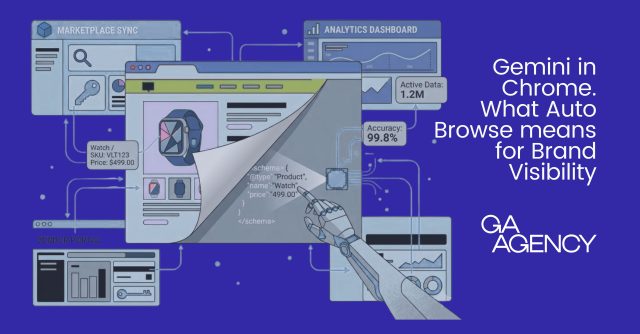

















Google has introduced Gemini 3 Auto Browse in Chrome, embedding its latest AI directly into the browsing experience. This feature allows the AI to navigate websites, fill forms, compare options and assist with multi-step tasks on a user’s behalf, while pausing for sensitive actions like purchases or logins. (blog.google)
For digital marketers, understanding Auto Browse is important because it reflects a broader trend: AI is increasingly mediating online experiences, not just assisting with queries.
How Auto Browse Works
Auto Browse operates from a persistent sidebar in Chrome, enabling the AI to work alongside normal browsing. Unlike traditional assistants, it can manage tasks across multiple tabs, from planning travel to researching products, all while keeping users in control.
This shift represents a subtle but meaningful change: the AI moves from a reactive helper to a proactive co‑pilot, capable of completing actions and reducing manual effort for users.
Implications for SEO and Paid Media
Discovery May Shift
If Auto Browse extracts content and completes tasks without requiring clicks, traditional metrics like click-through rate may become less indicative of engagement. Structured data and high-quality, machine-readable content will become increasingly important.
Intent Captured Earlier
Auto Browse can identify user needs and compare options before a user reaches a page, meaning marketers must optimise for clarity, relevance, and accessibility to ensure AI agents interpret content correctly.
Paid Media Evolution
While not a paid format itself, Auto Browse hints at future opportunities for contextual offers or promotions integrated within AI-driven workflows. Paid teams should monitor how AI-mediated interactions affect conversion paths.
Measurement Challenges
Autonomous browsing introduces new attribution considerations, as users may complete tasks without visiting traditional landing pages. Tracking frameworks may need adaptation to account for these AI-assisted interactions.
Strategic Takeaways
Auto Browse is currently limited to Google AI Pro and Ultra users in the US, but it signals a shift in user behaviour towards agent-assisted web interactions. Marketers should:
- Ensure content is structured and AI-friendly.
- Treat site visits as one of several touchpoints.
- Focus on data quality and clear product information.
- Observe user behaviour carefully as AI features evolve.
Conclusion
Gemini 3 Auto Browse represents a step towards AI-driven task automation in browsing. It does not replace search or ads, but it highlights the importance of making content accessible to AI agents and rethinking engagement metrics. For marketers, measured observation, strategic preparation, and high-quality content will ensure brands remain visible and relevant in an increasingly AI-mediated online landscape.
Let’s talk about what’s next for your ecommerce strategy. Contact us today to get started.

Article author

Chiara Riva
Business Development Assistant