

















Table of Contents
Imagine spending less time managing your pay-per-click (PPC) ad campaigns whilst achieving a higher return on investment. PPC automation makes this possible. Leveraging advanced algorithms and machine learning can streamline your campaign management, saving time and improving results.
In this blog, we’ll explore the pros and cons of PPC automation, and provide insights on how to implement automated PPC campaigns effectively. We’ll highlight some of the best solutions to help you get started.
Let’s dive into the details.
What is PPC Automation?
PPC automation involves using advanced software and algorithms to manage various aspects of your Pay-Per-Click (PPC) ads.
Unlike manual PPC management, where marketers have to manually set bids, manage keywords, and adjust ad placements, PPC automation streamlines these processes by leveraging machine learning, artificial intelligence & automated rules.
These tools handle repetitive tasks and optimise your campaigns in real time, allowing marketers to focus on strategy and creative elements.
However, PPC automation doesn’t mean you can sit back and let the system do all the work. Effective PPC campaign management requires ongoing monitoring and adjustments beyond the initial setup.
One critical component of a successful PPC campaign is the bidding strategy, which can be either automated or manual. Even with automation, PPC managers must monitor performance, refine targeting, and adjust strategies to ensure optimal results.
What PPC Campaign Elements Can You Automate?
Automating your PPC ads can significantly increase your revenue opportunities. With digital ad spend projected to reach $306.7 billion in 2024, it’s crucial to leverage automation to maximise your returns.
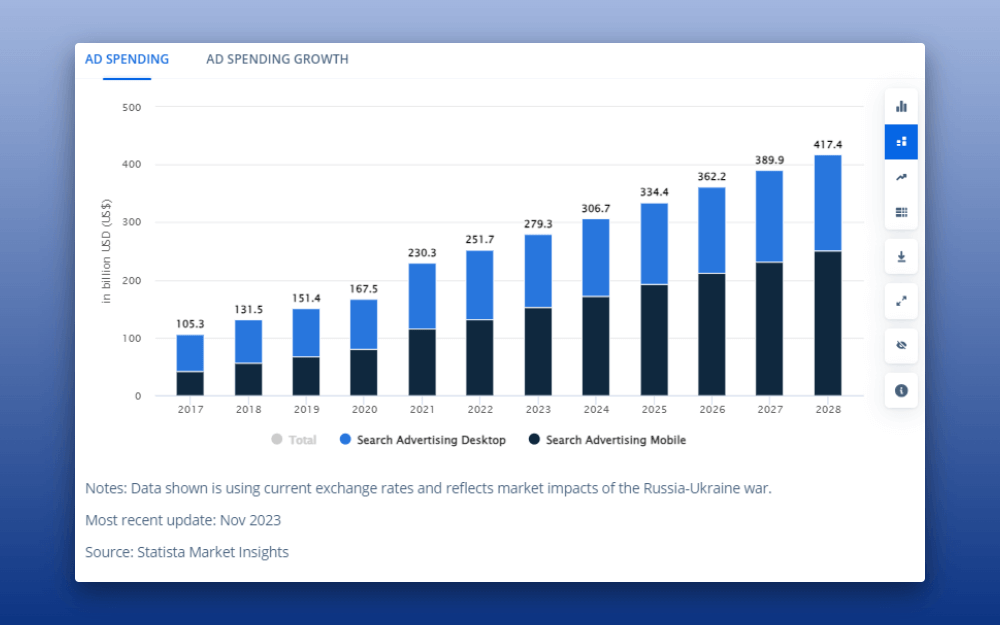
By automating various elements of your PPC campaigns, you can ensure your ads are optimised in real-time, capturing more high-intent clicks and driving conversions more efficiently.
Here are the key PPC campaign elements you can automate:
- Bid Strategy Management: Choose the best bid strategy to optimise campaigns in real-time based on competition, user behaviour, and performance metrics.
- Keyword Management: Identify and implement new keywords, manage negative keywords, and optimise existing ones.
- Ad Copy Optimisation: Test multiple versions of ad copy, as well as landing pages to determine which performs best and adjust accordingly.
- Audience Targeting: Segment and target audiences based on detailed demographic and behavioural data.
- Reporting and Analytics: Generate comprehensive performance reports to provide actionable insights for campaign optimisation.
However, it’s essential to understand the pros and cons of relying on automation. Automation can save time and improve efficiency, but it also requires careful setup and monitoring to avoid potential pitfalls.
Next, we will delve into the specifics of PPC automation pros and cons.
Advantages of Paid Search Automation
Struggling to keep up with the manual management of your PPC campaigns? Let’s explore how PPC automation can transform your advertising efforts.
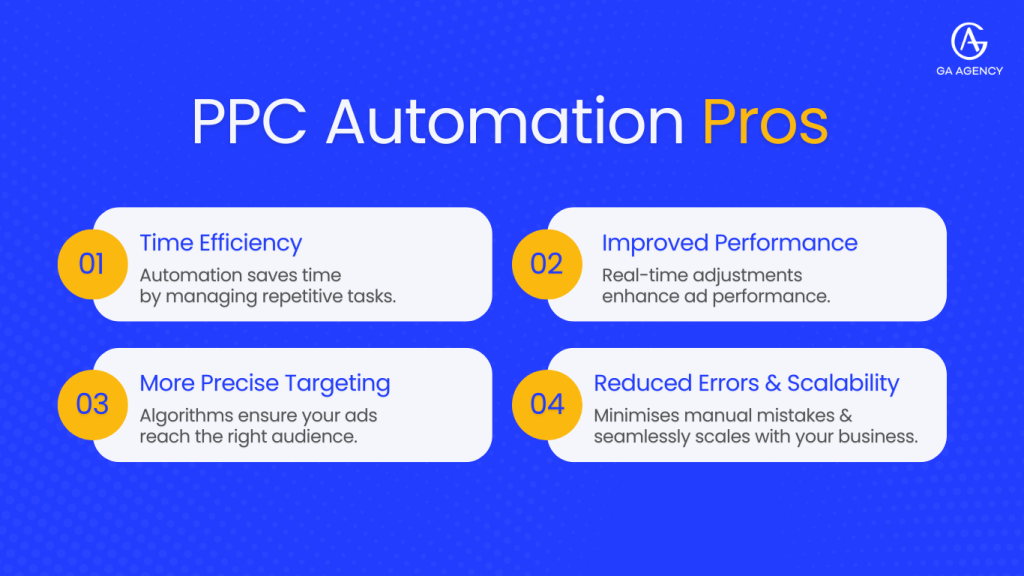
Time Efficiency
Automation means less effort and huge time-saving benefits. The real reason we’re highlighting it is the massive impact compared to manual management.
Automating time-consuming tasks like bid adjustments and keyword management can save you a significant number of hours each week. Whilst you still need to check in regularly to assess performance, you can shift your focus from manual adjustments to strategic planning.
Instead of spending hours manually tweaking bids for countless keywords, automated systems use real-time data to make instant adjustments.
Improved Performance & Optimisation
Automation leverages advanced algorithms to make real-time adjustments, optimising bids, keywords, and ad placements without manual intervention.
Platforms like Google Ads and Microsoft Ads use machine learning to ensure your ads reach the right audience at the best times.
This continuous optimisation helps to drive better ad performance and higher ROI, allowing you to focus on account testing and other optimisations.
More Precise Targeting
Tired of casting a wide net and hoping for the best? PPC automation refines your targeting to laser precision. Advanced algorithms analyse user behaviour, demographics, and browsing patterns to ensure your ads reach the most relevant audience.
This level of precision can help to increase your click-through rates. It ensures that your ad spend is used more efficiently, maximising your ROI by focusing on the audience that is showing the most intent to convert .
Reduced Errors & Scalability
Ever spent hours fixing manual errors in your PPC campaigns, like wrong bid settings or not having significant keyword coverage to capture emerging search trends? It’s frustrating and costly. Automation can avoid all that by using precise algorithms to manage your campaigns, reducing the risk of human error.
Moreover, scaling your PPC efforts manually as your business grows can be a logistical nightmare. PPC automation handles this effortlessly, managing large volumes of data and multiple campaigns simultaneously. This ensures your marketing remains efficient, even as you expand.
Tired of manual errors and scalability issues? Our experts can set up and optimise automated PPC campaigns to streamline your activity.
Drawbacks of Paid Search Automation
After exploring the benefits of PPC automation, you might wonder why it isn’t a standard practice. However, as with any approach, there are certain drawbacks to consider.
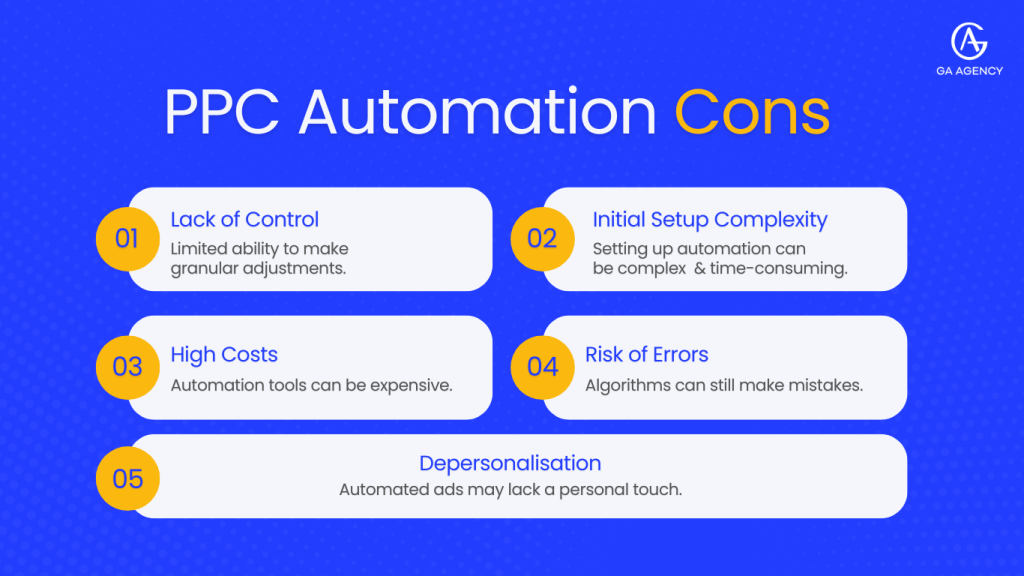
Lack of Control
One significant drawback of PPC automation is the limited ability to make granular adjustments. Automation relies heavily on algorithms to manage campaigns, which can sometimes lead to decisions that don’t perfectly align with your brand’s specific goals. Regular monitoring and occasional manual adjustments are crucial to ensure that automation aligns continuously with your strategic vision.
Initial Setup Complexity
Setting up PPC automation isn’t as simple as flipping a switch; it requires a comprehensive understanding of various tools and intricate configurations. This complexity can be overwhelming, particularly for those who are new to PPC or lack technical expertise.
An improperly configured setup can result in inefficient campaigns and wasted budget, turning what should be a time-saving solution into a frustrating experience.
This is where expert guidance becomes invaluable. At GA Agency, our team of specialists can simplify the setup process, ensuring your PPC automation is configured for optimal performance right from the start.
If you’re finding the initial setup of PPC automation daunting, let our experts help you. Learn more about our services now.
High Costs
Whilst there are no minimum costs to advertising on Paid Search platforms, and their pricing model being based on only paying when a customer interacts with your ad, some premium third-party automation tools often come with high costs, which can be a barrier for small businesses or those with limited budgets. Additionally, the ongoing expenses for maintaining and optimising these tools can add up, making it crucial to ensure that the benefits outweigh the costs.
Risk of Errors
Automation isn’t a magic wand that eliminates all problems—it can still make mistakes, and sometimes those mistakes can be quite costly. Imagine your PPC automation tool deciding that “luxury cat beds” should be a top keyword for your dog food campaign.
While it’s humorous to picture a high-bid ad for dog food showing up in searches for cat products, in reality, these errors can drain your budget and skew your campaign results.
Despite the advanced algorithms, automation tools can misinterpret data or make incorrect adjustments, especially if not monitored regularly.
This highlights the importance of regular checks to ensure your campaigns stay on track. Automation can handle the heavy lifting, but a human touch is still essential to catch and correct any errors the system might make.
Depersonalisation
Automated systems can struggle to capture the unique voice and nuanced messaging that resonates with your audience.
Automation relies on data and algorithms, which means it can miss the human touch to personalise and connect with customers on an emotional level.
While PPC automation excels at efficiency, it sometimes sacrifices the personal flair that sets your brand apart. Regularly reviewing and tweaking automated campaigns can help maintain that personal touch, ensuring your ads continue to resonate authentically with your audience.
Automated Or Manual PPC: Which Is Better?
Deciding between automated and manual PPC management boils down to your specific priorities and objectives. Automation offers significant time savings, scalability, and data-driven optimisations, making it ideal for handling large-scale campaigns efficiently.
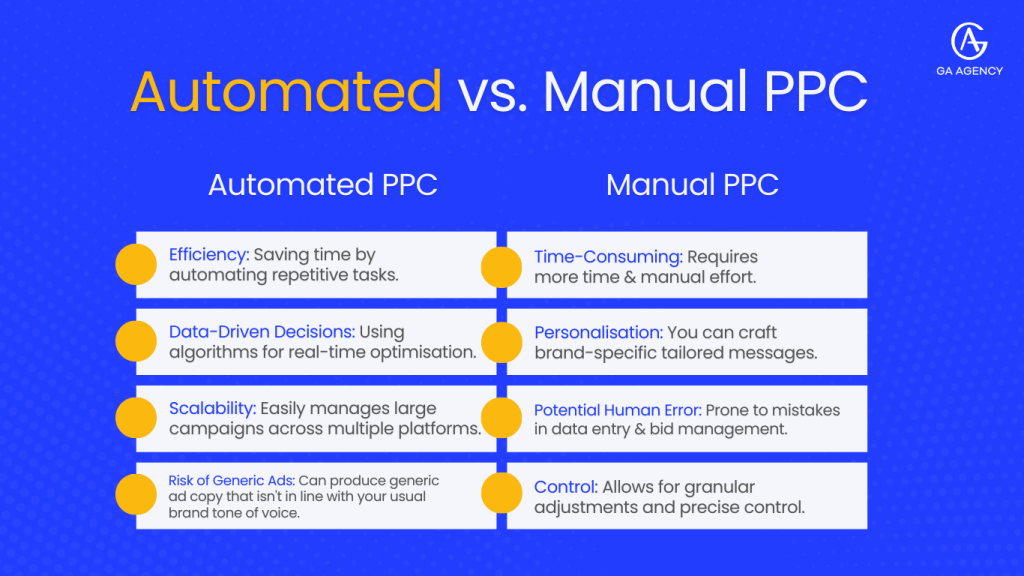
However, it can sometimes produce generic ads that lack a personal touch. On the other hand, manual PPC management allows for detailed control and customisation, ensuring your ads reflect your brand’s unique voice.
But, it’s labour-intensive and more susceptible to human error. Ultimately, the best choice depends on whether you value efficiency and scale or control and personalisation more. Each approach has its merits and can be effective depending on your campaign goals.
How to Get Started with Automated PPC Ads?
Jumping into PPC automation can revolutionise your ad campaigns, but where do you start? Here’s a quick guide to help you integrate automation effectively:
- Identify Automation Opportunities: Review which parts of your campaign management, like bid adjustments or ad scheduling, require frequent updates and could benefit from automation.
- Define Clear Goals: Set specific, measurable goals for your campaigns, such as increasing conversions or reducing cost-per-click. These objectives will guide your automation strategy.
- Choose the Right Tools: Select PPC automation tools that fit your needs and budget. Google Ads itself offers robust automation features.
- Set Up Proper Tracking: Implement advanced tracking and analytics to monitor the performance of your automated campaigns. Accurate data collection is essential for making informed adjustments.
- Test and Optimise: Continuously test elements like ad copy, keywords, and bidding strategies. Use the insights to optimise your campaigns for better performance.
Consult Experts When Needed: Partner with experts to ensure your campaigns are set up and optimised effectively, helping you maximise the benefits of PPC automation.
By following these steps, you can effectively automate your Google Ads campaigns, saving time and enhancing performance. Remember, while automation can significantly improve efficiency, regular monitoring and adjustments are crucial to maintaining alignment with your marketing goals.
Just keep in mind that over-relying on automation without proper oversight can lead to suboptimal results.
Start Your Automated PPC Campaign
Balancing automation with manual oversight is crucial for the success of your PPC campaigns. While automation can significantly enhance your campaigns’ efficiency, regular monitoring and adjustments ensure that your ads align with your strategic goals and maintain a personal touch.
Automation provides control and scalability, optimises performance, and reduces errors, but it must be carefully managed to avoid issues like lack of control and depersonalisation.
We also explored the pros and cons of automation versus outsourcing for PPC management. Automation offers unparalleled control and scalability, making it ideal for in-house management. However, outsourcing can provide valuable expertise and manage complex tasks more effectively.
Stay informed, stay ahead, and get ready to launch your automated PPC campaigns with confidence. For more insights and professional assistance, explore GA Agency’s comprehensive services to maximise your PPC success.
Frequently Asked Questions About PPC Automation
What Are the Primary Benefits of PPC Automation?
PPC automation offers several key benefits, including time efficiency, improved campaign performance, accurate data analysis, and precise audience targeting.
By leveraging advanced algorithms, automation tools optimise bids, manage keywords, and schedule ads in real-time, which helps in maximising ROI and minimising manual efforts.
What Are the Main Drawbacks of Using PPC Automation?
Despite its benefits, PPC automation has drawbacks, such as a lack of control over granular adjustments, initial setup complexity, high costs, and the potential for errors and depersonalisation. Automated systems can make decisions that may not always align perfectly with brand goals, and the setup can be technically demanding.
How Do I Get Started with PPC Automation on Google Ads?
To start with PPC automation on Google Ads, review which parts of your campaign need automation, such as bid adjustments or ad scheduling.
Is It Better to Manage PPC Campaigns In-House or Hire an Agency?
Deciding whether to manage PPC campaigns in-house or hire an agency depends on your specific business needs. Managing PPC in-house provides greater control and scalability, making it suitable for businesses that want direct oversight of their campaigns. However, hiring an agency offers access to specialised expertise and is beneficial for handling complex strategies and tasks. Often, a combination of both in-house management and agency support yields the best results.

Article author

Chiara Riva
Business Development Assistant