


















It is said that a picture is worth a thousand words.
The most recent SEO techniques seem in accordance with this quote! If the SEO landscape is continually evolving, one of the most impactful shifts of 2024 is the ascension of visual search.
In fact, visual-oriented exploration is increasingly taking over the traditional text-based search, which is why e-commerce websites, if they want to stay competitive, have to optimise their visual search strategy.
What are the best practices in 2024, and how can companies enhance their visual search strategy? Here’s what you need to consider for your business this year!
What Is Visual Search SEO?
Definition of Visual Search SEO
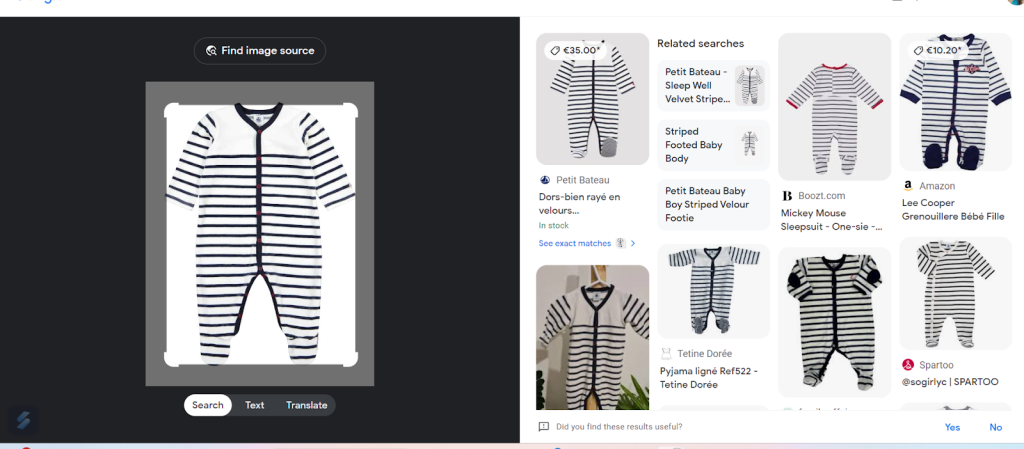
Visual search consists of conducting online searches using images rather than text. In simple terms, users can search for information using a picture instead of text and keywords.
How does that work, exactly? Visual search uses Artificial Intelligence combined with Machine Learning Technology to detect an image or part of it and provide users with relevant results.
Applications and Benefits of Visual Search for Users
Text-based searches can take some time to be formulated correctly by users who want to get more helpful and relevant results. Besides, text-based queries can have multiple meanings and intents, making it more difficult for search engines to understand what users really want.
As a result, visual search makes it easier for both the machines and the users, since it provides accurate results, with the least inconvenience or effort.
Another advantage of visual search is its everyday practicality. It can actually help users with several daily life issues, such as copying and translating text, locating unknown locations, finding inspirational new products, doing shopping comparisons, or finding products or business information.
Popular Platforms for Visual Search
As mentioned above, Search engines use visual search, but other famous platforms, such as e-commerce websites and social media, also use visual search. Here are the most popular platforms with their own visual search tool.
Google Lens
Released in 2017, Google Lens became available on most Android and iOS devices in 2018. Since then, Google has added many features to the tool to make it more useful for users.
In February 2024, during its “Live from Paris” AI event, Google announced that Google Lens was used for 10 billion searches per month, against 8 billion in May 2023 and 3 billion in June 2023.
This shows the significant increase in Google visual search use over the years. Like Google, the search engine Bing also has its own visual search tool.
Pinterest Lens
“The future of search will be about pictures rather than keywords”, said Ben Silbermann, the Pinterest CEO, in 2017. The same year, Pinterest was introducing the beta version of Lens, its visual search tool. Only a year later, according to Pinterest, users were conducting over 600 million searches every month using Pinterest Lens. With this tool, users can easily identify different visuals inside the same pin, as shown in the capture below.

Amazon Image Search
The huge American e-commerce website also has its own visual search tool. To provide its customers with relevant products, Amazon introduced visual search too, combining Augmented Reality (AR), so that users could take a virtual experience and try on the products or experience how the products would look in their place.
Why Is It Important to Optimise Your Visual Referencing Strategy?
Optimising for visual search is becoming increasingly important as users rely more on tools like Google Lens, Pinterest Lens, and other image-based search technologies to research information or products.
According to a Visenze report from 2023, 62 percent of Millennials and Gen Z customers wanted visual search more than any other technology.
Visual Search Complements Text-based Searches
When a search engine analyses an uploaded image, it will present similar products, allowing the user to discover a wider range of options that wouldn’t have been found through text-based searches. Your products can now be seen through text-based search and visual search.
Visual Search Can Boost Your Sales by Providing Complementary Shopping Items
Many brands have already included visual search features in their websites and/or mobile apps. When a user uploads a picture of a product, other complementary items from your brand can be displayed, increasing the number of purchases.
Visual Search Integrated with AR Increases User’s Confidence
Thanks to visual search and the integration of augmented reality (AR), the uncertainty associated with online shopping can be reduced today. By using AR and allowing your customers to try on your products online, for instance, you enhance the global shopping experience and gain customers’ trust.
Tips for Optimising Your Visual SEO Strategy in 2024
Optimising your website and content accordingly is imperative to improving visibility and performance in visual search results.
Here are our best tips to improve your visual referencing:
Use High-Quality Images
Try to use unique images that are relevant to your content and that stand out from stock photos. Ensure that the images you use on your website are of high quality and properly lit. High-quality images will help your business create a better impression and be easily recognisable by both potential customers and search engines.
Optimise Your Images
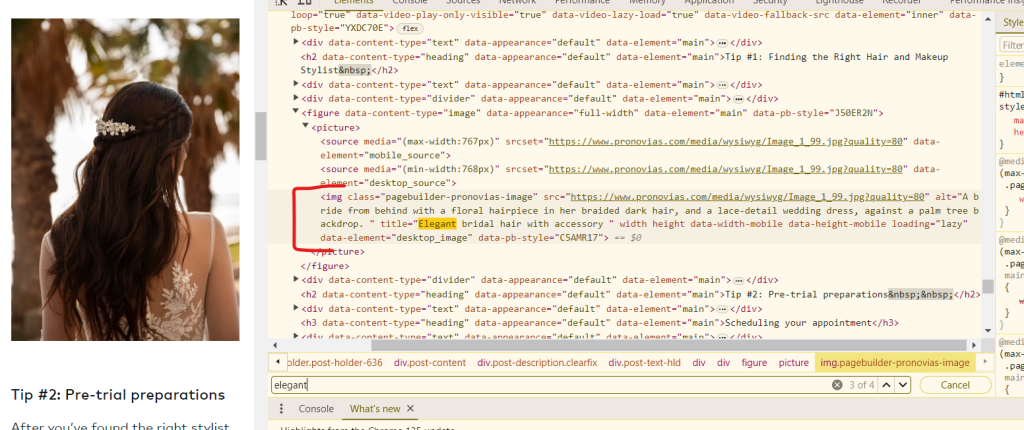
Use descriptive and keyword-rich file names for your images, such as “brown-leather-sofa.jpg” instead of “IMG1234.jpg”. Don’t forget about descriptive alt text and image titles. Both have to include relevant keywords to help search engines understand the content of the image and increase its search visibility.
Include Structured Data-Markup
Including structured data markup or schema markup helps search engines understand your webpage and analyse correctly the different elements that compose it.
Schema markup allows you to describe precisely the type of image (a logo, a thumbnail, a featured image…), its price, or again offers, for example. As a direct consequence, search engines can analyse your web pages easily, increasing the chances of your images being seen on the top of visual search results.
Use Image Sitemaps
The pages of your website you include in sitemaps are important. Search engines will index them first, as compared to other pages you don’t include in your sitemap. The same applies to images. By creating an image sitemap, you will increase the chances for your images to be easily discovered by search engines, and they will appear first in visual searches.
Adopt a Responsive Design
To improve your visual referencing, don’t forget to ensure your images, and more generally your website, are optimised for mobile devices, as in the last quarter of 2023, mobile devices generated 58.67 percent of global traffic.
Provide users with a fast loading by optimising your image sizes and using compression to improve the user experience.

Bring a Contextual Relevance to Your Images
Even if your images are of high quality, you have to surround them with relevant text content to improve the relevance, so that search engines can better understand the context.
Use Branding Elements and Watermarks
Apply watermarks and branding elements on your images to reinforce your brand identity, without compromising the image quality.
Take Account of Social Media Integration
Optimise your images for sharing on social media, to increase visibility and potential backlinks. You can also use rich pins on Pinterest for instance, to provide more context and information about your images.
Boost User Engagement
Use interactive images to increase user engagement and the time users spend on your website. For instance, use 360-degree views, zoom features, or even Augmented Reality allowing users to try on your products, for instance.
Don’t Forget about Regular Updates and Monitoring
Keep your images and visual content regularly updated. Remember to use analytics tools to track the performance of your image in visual search so you can make adjustments if needed.
Conclusion
To stay competitive in 2024, businesses must include visual search at the heart of their SEO strategy. With the rise of social media shopping and augmented reality, consumers conduct their research differently, in a simpler, faster, and more efficient manner.
Some of the best ways to optimise images for visual search are using high-quality images, including structured data markup, adopting a responsive design, and adding watermarks and branding elements.
By adopting these techniques, your business can stay ahead and improve its online visibility, while providing engaging experiences to its users. As visual search is continuously evolving, it is essential to adapt its advantages to unlock new opportunities.
Are you looking for more ideas to improve your visual search strategy? Get in touch with GA Agency for tailored solutions that fit your business needs.

Article author

Chiara Riva
Business Development Assistant