
















AI search is fundamentally changing how people find information online. Unlike traditional search, which attempts to match a single query to the most relevant page, AI-driven systems break complex queries into multiple sub-questions, retrieve information for each, and synthesize a comprehensive response. This process is called query fan-out, and it’s reshaping how brands need to think about search visibility.
Understanding query fan-out matters because it affects whether your content surfaces in AI-generated responses, how your brand is portrayed and ultimately, whether you’re visible during critical moments in the customer journey. This article explains what query fan-out is, why AI systems use it, and how brands can optimize content to perform well in this new search environment.
What Is Query Fan-Out?
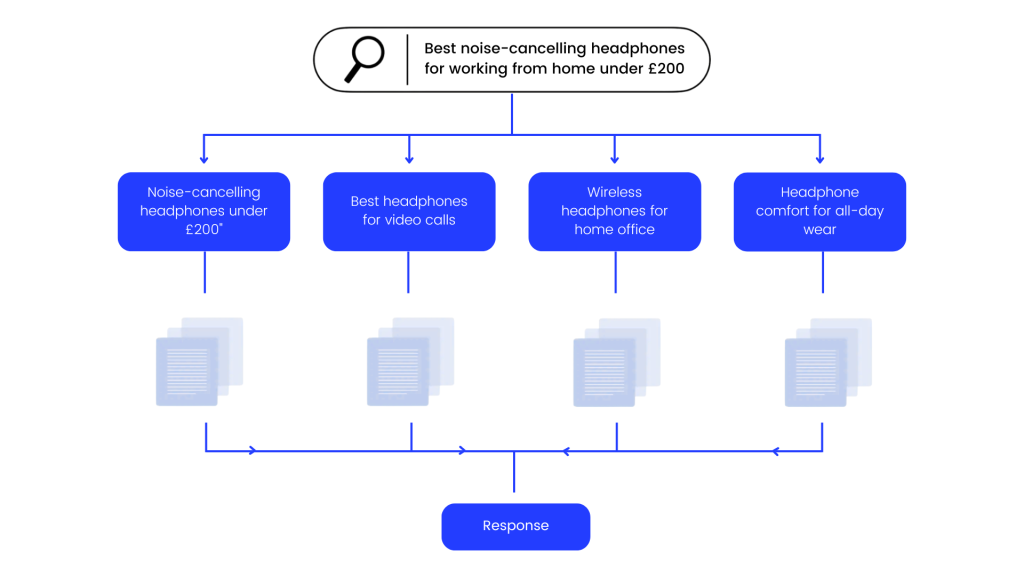
Query fan-out is the process AI search systems use to decompose a user’s query into multiple sub-queries, gather relevant information for each, and combine that information into a single, coherent response.
Google introduced the term when launching AI Mode, describing it as a “query fan-out technique” that allows the system to “break the question into different subtopics and issue a multitude of queries simultaneously”. This approach enables AI to answer complex, multi-faceted questions that wouldn’t have clear answers in traditional search results.
How AI systems break down a complex product query into multiple sub-queries:
Why AI Systems Use Query Fan-Out
AI systems employ query fan-out because it produces more useful, accurate and contextually relevant responses than simply retrieving a single best-match page.
Traditional search works well when there’s a clear, direct answer to a query. But many queries are nuanced, multi-dimensional or require synthesis across different information sources. A user asking “best project management tool for a remote design team of 15 people” isn’t looking for a single article – they need information about design-specific features, remote collaboration capabilities, pricing for mid-sized teams and integration options.
Query fan-out allows AI systems to address implicit intent alongside explicit questions, provide comprehensive answers to complex queries, and deliver responses tailored to specific contexts mentioned in the original question. This shift fundamentally changes what “ranking” means: the goal is no longer to be the single best result, but to be referenced as part of a synthesized answer.
Why Query Fan-Out Matters for Brands
Query fan-out matters because it determines whether your brand appears in AI-generated responses, how you’re portrayed, and whether you reach users at critical decision points.
As AI adoption increases, more users are beginning research, product comparisons, and purchase decisions within AI interfaces rather than traditional search results. If your content isn’t structured to perform well in query fan-out scenarios, you risk losing visibility precisely when potential customers are evaluating options.
There are two primary ways brands surface in AI-driven search:
- AI mentions are unlinked references to your brand, product, or service within an AI-generated response. These shape perception and awareness but don’t directly drive traffic.
- AI citations are linked references where the AI system attributes specific information to your content and provides a clickable source. These can drive traffic and establish authority.
Example of AI mentions and citations in ChatGPT responses:
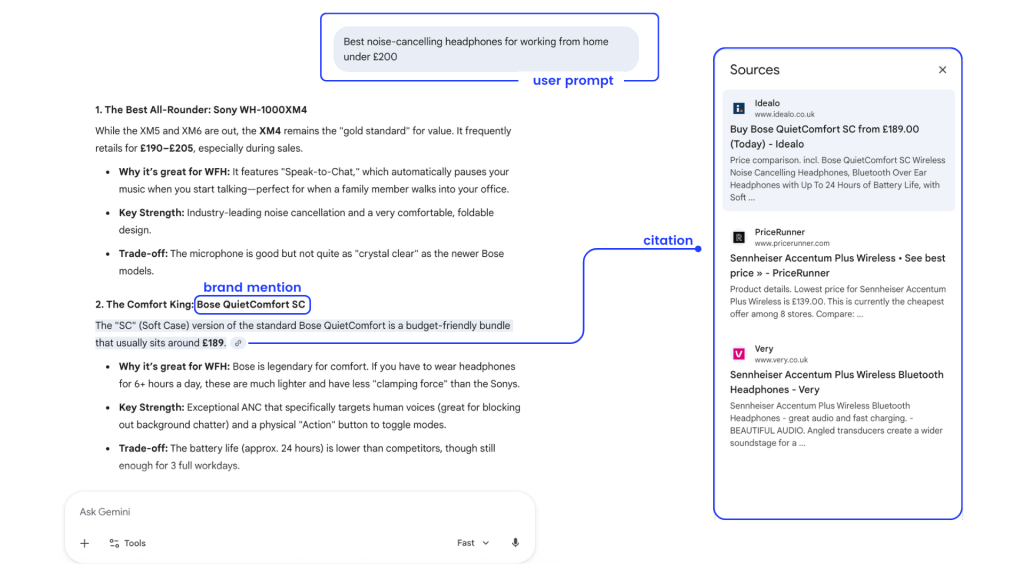
Both matter. A brand consistently mentioned in AI responses for relevant queries builds familiarity and credibility. Citations drive referral traffic and signal to the AI system that your content is authoritative for specific topics.
At GA Agency, we use BuzzWatch to track both mentions and citations across AI platforms. This allows us to see not only how often brands appear in AI responses, but also which content AI systems cite most frequently, revealing which pages are most effective at addressing query fan-out scenarios.
The challenge is that AI systems don’t simply rank pages by authority or relevance in the traditional sense. They evaluate content based on how well it answers specific sub-queries that emerge from the fan-out process. This means brands need to think about topical coverage, content structure, and semantic clarity in ways that differ from traditional SEO.
How to Optimize Content for Query Fan-Out
Optimizing for query fan-out requires a shift from targeting individual keywords to building comprehensive topic coverage, structuring content for machine readability, and establishing clear entity relationships.
1. Build Comprehensive Topic Coverage
Query fan-out splits complex queries into sub-questions. To surface in AI responses, your content must address not just the primary topic but also related subtopics that might emerge during the fan-out process.
This means identifying core topics relevant to your business, then building content clusters that cover those topics in depth. A content cluster consists of a pillar page providing a broad overview and supporting pages addressing specific subtopics.
Tools like BuzzWatch help identify which topics and subtopics generate the most AI mentions, revealing where your content cluster strategy is working and where gaps exist. By tracking which queries trigger mentions of your brand versus competitors, you can prioritize content development in areas with the highest strategic value.
2. Structure Content for AI Interpretation
AI systems use natural language processing to understand content. Writing with this in mind improves your chances of appearing in AI-generated responses.
- Write in clear, self-contained sections that can stand alone.
- Use descriptive headings that indicate what each section covers. Provide direct definitions when introducing new concepts.
- Avoid jargon and unnecessary complexity.
- Tables, lists and structured formats make information easier for AI systems to parse and extract.
3. Implement Schema Markup
Schema markup adds machine-readable labels to content, helping AI systems interpret information more accurately. Product, Organization, Service, and FAQ schema are particularly valuable for query fan-out optimization.
For example, Product schema with attributes like name, description, pricing, and features makes it easier for AI systems to retrieve and reference your products when answering product-related queries. Organization schema helps establish clear entity relationships across your content.
Consistent terminology and naming conventions across your site also matter. If you refer to the same product or concept using different names, AI systems may struggle to recognize them as the same entity, fragmenting your authority.
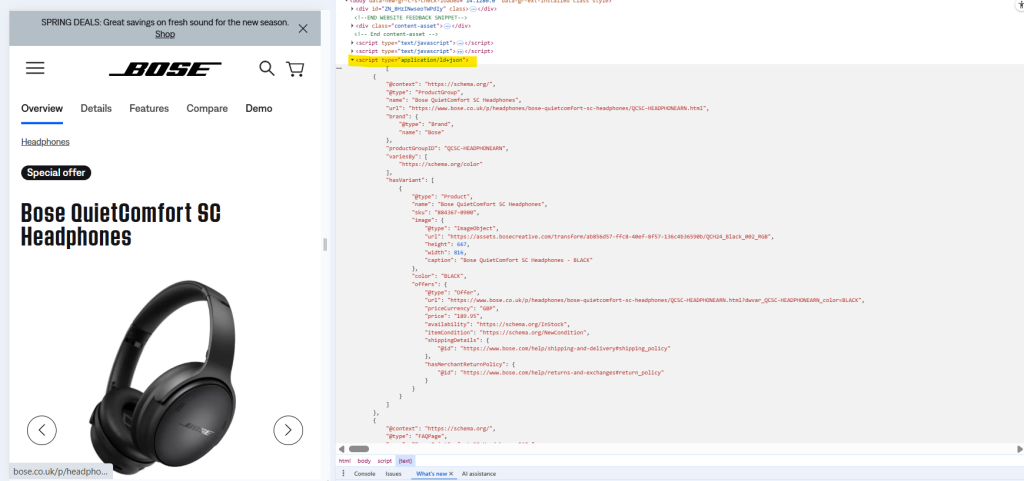
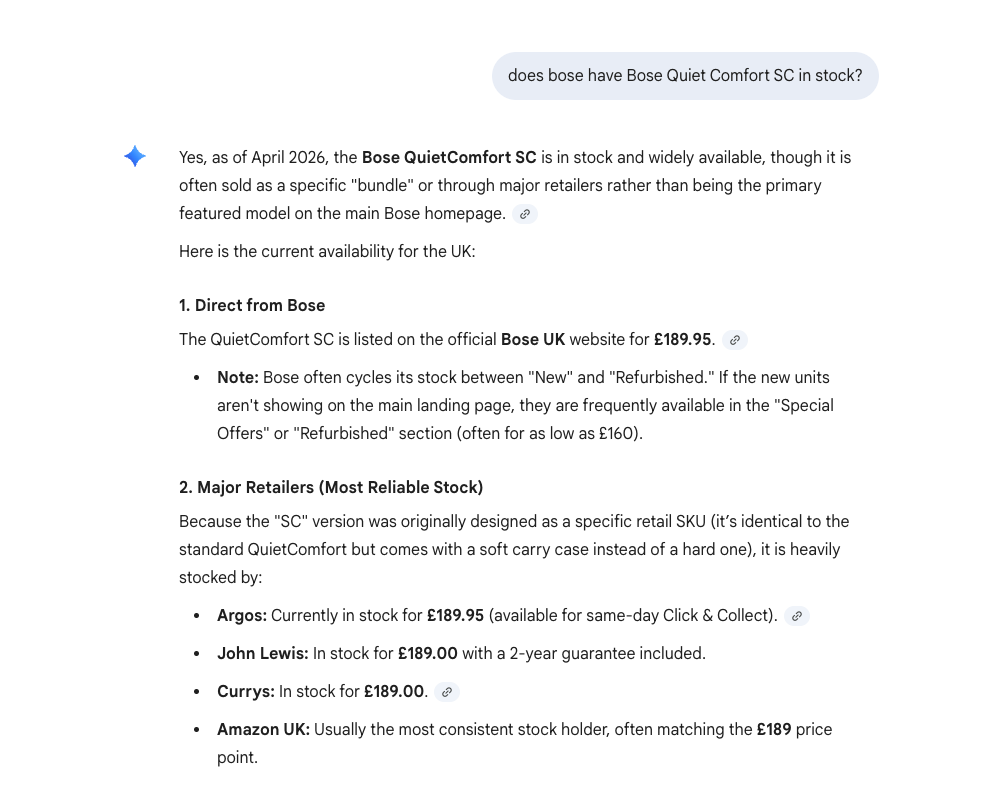
For instance, when a user asks if a product is in stock, AI systems can extract structured data from Product schema to provide immediate, accurate answers.
4. Answer Specific Questions
Query fan-out generates highly specific sub-queries. Content that directly addresses niche questions is more likely to be retrieved and cited.
FAQ sections, how-to guides, and comparison pages are particularly effective. These formats, when structured clearly and written concisely, become highly retrievable sources for AI systems.
5. Maintain Content Freshness
AI systems often prioritize recently updated content, particularly for topics where accuracy depends on current information. Regularly review and update key pages to signal that your content reflects the latest understanding and best practices.
Conclusion
Query fan-out represents a fundamental shift in how search visibility works. Brands that adapt their content strategies to account for this will maintain visibility as AI adoption accelerates. Those optimizing solely for traditional search risk becoming invisible in AI-generated responses, even if they rank well in traditional SERPs.
The most effective approach combines traditional SEO fundamentals with AI-specific optimizations. Strong technical foundations, authoritative backlinks, and high-quality content remain important. But these must now be paired with comprehensive topic coverage, clear content structure, semantic precision, and entity definition optimized for AI interpretation.
At GA Agency, we help brands build content strategies that perform across both traditional search and AI-driven discovery. Using BuzzWatch’s comprehensive AI visibility tracking, we measure how effectively your content addresses query fan-out scenarios, identify gaps in topic coverage, and optimize for the sub-queries that matter most to your business.
Want to improve how AI platforms discover and cite your content? Contact our team for a consultation on AI visibility measurement and optimization strategy.

Article author

Chiara Riva
Business Development Assistant