

















Search is evolving, and the expectations for clarity in performance reporting are evolving with it. At GA Agency, we continuously look for ways to provide clients with deeper insight into what is driving their organic visibility. Until now, Google Search Console grouped all organic traffic together, which made it more challenging to distinguish between brand-driven demand and SEO-driven discovery.
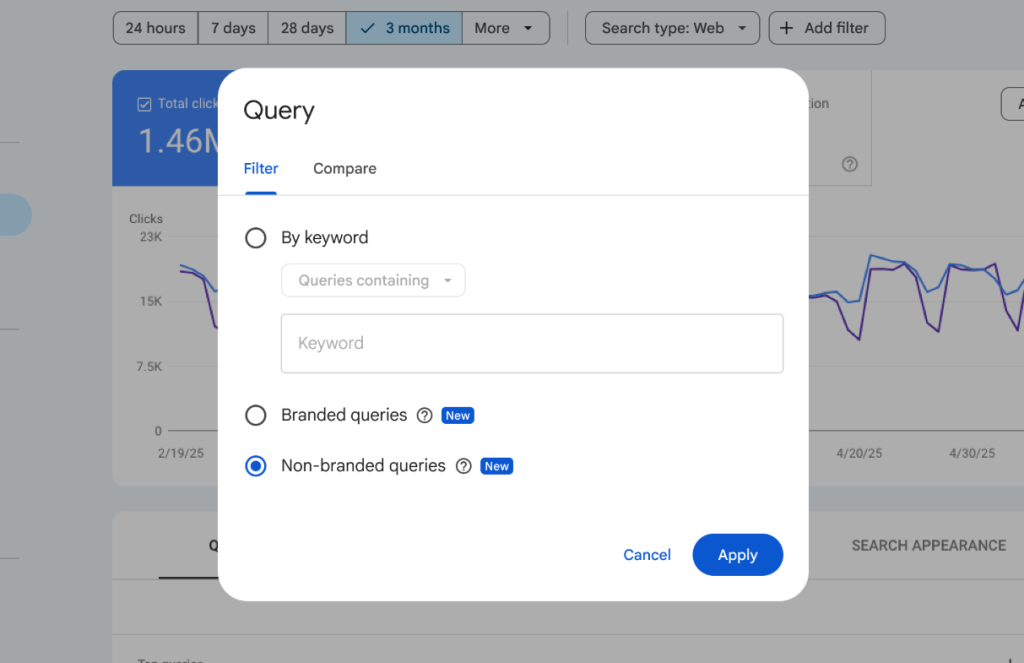
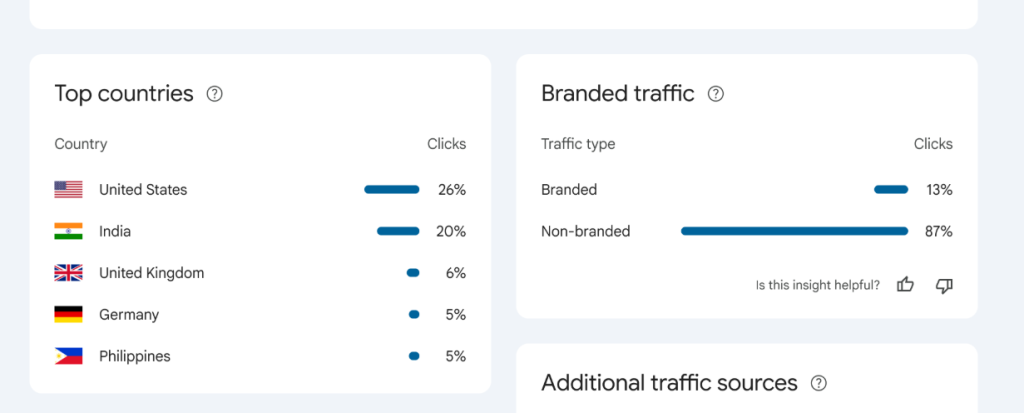
Google’s new Branded Queries Filter, introduced in November 2025, brings an important layer of precision to Search Console reporting. It offers a clearer view into how users find your website by separating branded queries from non-branded queries through an AI-assisted classification system. This update improves the quality of SEO analysis and empowers brands to make more confident, data-inspired decisions.
This is not about replacing old methods. It is about gaining new visibility that was not previously available at scale.
Why Understanding Branded vs Non-Branded Matters
Organic performance has always included two types of intent:
- Branded searches from users already familiar with your business
- Non-branded searches from users discovering you for the first time
Both are valuable, but they serve different strategic purposes.
Branded queries naturally perform differently
Users who already know a brand tend to produce:
- Higher CTR
- Higher conversion rates
- More stable rankings
- More predictable impression patterns
This is normal and expected. However, these metrics can mask the performance of discovery-focused SEO when viewed in aggregate.
Non-branded queries reveal your competitive position
Non-branded searches show how well your content performs among users who are exploring their options or researching a topic without a specific brand in mind. This has always been the heart of SEO, but previously it required manual filtering to analyse reliably.
The Solution: Google’s AI-Driven Branded Queries Filter
Google has now introduced a native filter in Search Console that cleanly separates:
- Branded Queries
- Non-Branded Queries
This filter appears directly in the Performance Report and works across Web, Image, Video and News search types.
How Google identifies branded queries
Google uses an AI-powered classification system that recognises:
- Brand names
- Misspellings and variations
- Brand-related products and terms
- Acronyms and short forms
- Location-based brand queries
- Navigational-intent searches
This level of automation removes the need for custom filtering and provides a more dependable segmentation than teams could produce manually.
What You Can Now Analyse More Clearly
The filter gives you access to two datasets that help strengthen reporting and strategy.
Branded Queries: A Clearer View of Brand Demand
Branded queries shine a light on:
- Brand awareness trends
- Customer loyalty and return interest
- Marketing and PR impact
- Seasonal or campaign-specific spikes
- Brand presence in new regions
Key metrics include:
- Branded impressions
- Branded CTR
- Device-level branded trends
- Share of total branded search traffic
This dataset helps teams understand how wider brand activity contributes to search performance.
Non-Branded Queries: A More Precise SEO Performance View
Non-branded queries show how well your SEO strategy is capturing new audiences. They reveal:
- Competitive visibility
- Topic and content strengths
- Emerging search opportunities
- Pages with ranking potential that need optimisation
Key non-branded KPIs include:
- Non-branded impressions growth
- Average rank for non-branded queries
- Non-branded CTR
- Non-branded clicks
This is the clearest picture Google has offered of organic discovery.
Strategic Value for Agencies and Clients
This update enhances how teams evaluate performance without changing historical outcomes or rankings. It simply offers a more detailed lens.
Clearer attribution without replacing past reports
The new split allows teams to show:
- What brand familiarity drives
- What SEO visibility drives
This supports more nuanced conversations rather than undoing previous reporting.
Better alignment with the marketing funnel
Both query types serve different stages of the user journey:
- Non-branded users are researching or exploring
- Branded users are closer to taking action
The filter allows teams to align content and optimisation strategies accordingly.
More informed resource planning
Understanding both datasets helps brands decide where to focus:
- Brand marketing investments elevate branded demand
- Content and SEO investments improve non-branded discovery
Stronger KPI setting for leadership
Leaders gain clearer visibility into:
- Brand strength over time
- SEO effectiveness as an independent channel
This supports decision-making at the portfolio, market and campaign level.
What Teams Should Do Next
Apply the filter and create a baseline
Record your branded vs non-branded split to establish a new reference point.
Refresh your KPIs
Consider using:
- Non-branded growth for SEO success indicators
- Branded search growth for brand awareness indicators
Adjust strategy based on the two datasets
For non-branded growth, focus on:
- Content opportunities
- Topic expansion
- E-E-A-T improvement
- SERP competitiveness
For branded growth, focus on:
- Landing pages
- Core brand pages
- Conversion funnels
- Trust signals
Integrate segmented reporting
Create dashboards that visualise trends for each query type.
Limitations to Be Aware Of
- Only top-level domain properties with sufficient query volume can access the filter
- Google’s classification cannot be edited manually
- The filter affects reporting only, not ranking
- Some ambiguous queries may be grouped differently than expected
These limitations are normal for a new feature and do not affect site performance.
Final Takeaway: More Clarity, Not More Complexity
Google’s Branded Queries Filter gives brands and agencies a clearer and more structured understanding of search performance. It does not change historical results. It simply enriches reporting with insights that were difficult to produce at scale before this update.
With this new capability, organisations can:
- Understand how audiences find them more clearly
- Optimise strategies for both brand demand and discovery
- Align SEO performance with the full marketing mix
- Give stakeholders greater confidence in reporting
If you would like support interpreting branded vs non-branded data or aligning your SEO strategy with this new level of clarity, GA Agency is here to help.

Article author

Chiara Riva
Business Development Assistant