
















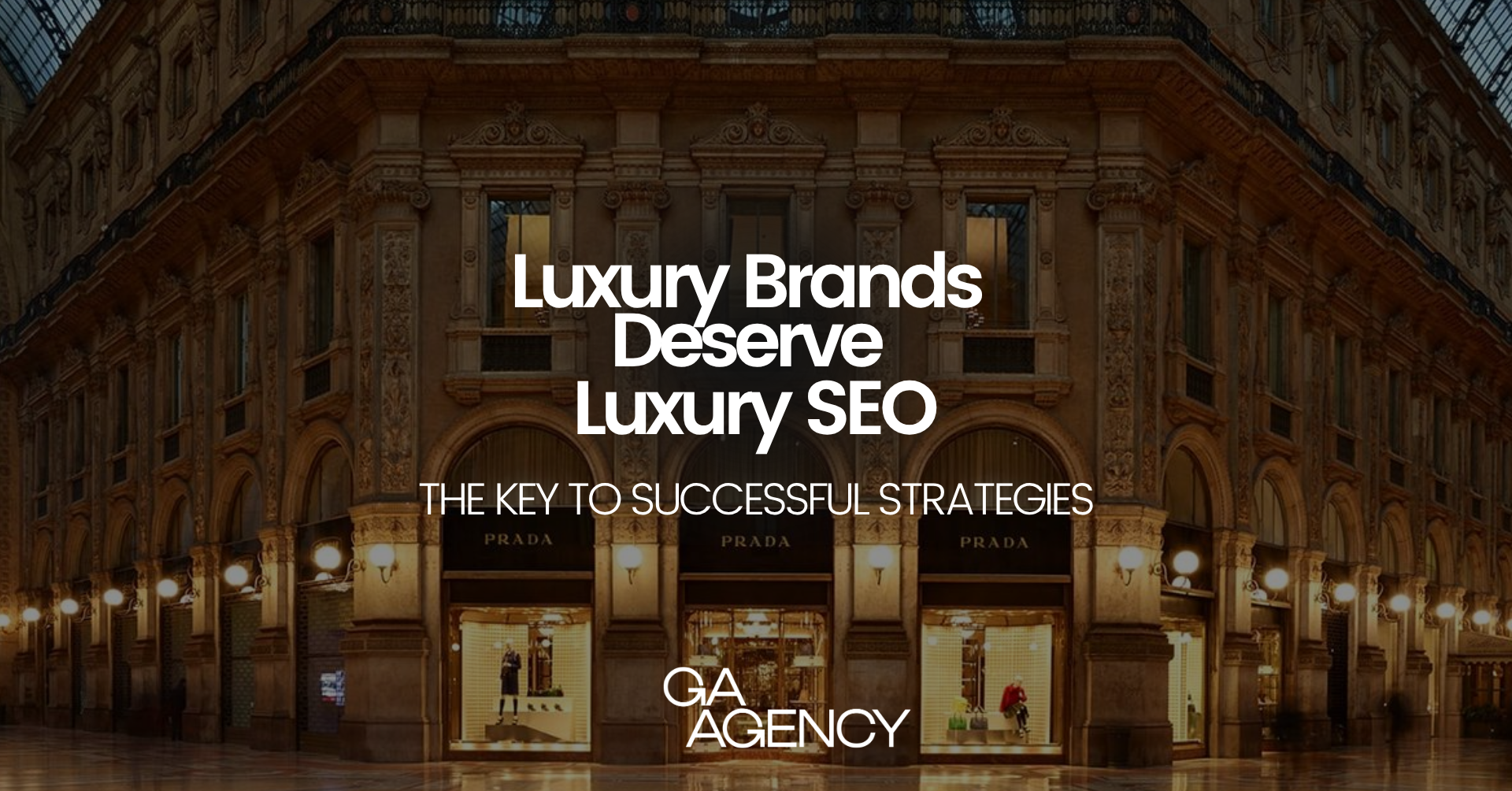
Luxury was online before most of retail took it seriously
A flagship boutique on Bond Street or Via Montenapoleone has always had a digital equivalent. Luxury brands built lavish, image-led websites years before mass retail treated e-commerce as anything more than a discount channel, and SEO followed naturally: if the store mattered, so did whether people could find it.
That relationship is being tested again. The luxury market spent most of last year stabilising rather than growing. According to the Bain-Altagamma Luxury Goods Worldwide Market Study, personal luxury goods sales came in at roughly €358 billion, a mild contraction from 2024 that amounted to a broadly flat performance once exchange rates are stripped out. What sits underneath that headline is more interesting than the number itself.
Growth hasn’t disappeared. It has concentrated
Only 40% to 45% of brands reported positive revenue growth in 2025, broadly in line with 2024 but well below the 65% seen in 2023 and the 95% recorded during the 2022 rebound. Specialist players outperformed generalists, with more than 70% of the brands that grew in 2025 being specialists, while roughly half of the industry’s £5 billion-plus groups saw revenues decline. Scale stopped being a reliable growth strategy some time ago.
The consumer base tells a similar story. The industry lost around 20 million consumers in 2025, bringing the global active client base to about 330 million, down from 400 million in 2022 and back to roughly its 2013 size. Only 40% to 45% of the total addressable population bought personal luxury goods in 2025, compared with around 60% in 2022.
That reshuffling matters for anyone selling into this smaller, pickier customer base. The brands still winning are earning it, and increasingly that fight is being decided before a shopper ever reaches a product page. That’s where the opportunity for search sits.
Consumers are researching value, meaning and trust before they buy
Capgemini’s What Matters to Today’s Consumer 2026 study, based on a survey of 12,000 consumers across 12 countries, found that price alone no longer defines value for shoppers. Quality, trust and emotional connection now matter just as much. 74% of consumers said they would switch brands for lower regular prices, which tells us price sensitivity hasn’t disappeared, it has simply stopped being the only lever. Brands are being judged on fairness, consistency and clarity of communication alongside cost.
The same research found a research behaviour shifting sharply toward AI:
- 25% of consumers had already used generative AI shopping tools in 2025, with a further 31% planning to.
- 76% want clear rules for when an AI assistant is allowed to act on their behalf.
- 71% are concerned about how these tools use their data.
- 74% still value in-person assistance in-store, and 66% value it during the purchase decision itself.
Put together, this describes a buyer who researches extensively, often through AI tools, before ever speaking to a person, but who still expects a brand’s human expertise to close the sale. That research phase is now largely invisible to the brand unless its content is built to be found and cited within it.
Generic e-commerce SEO was never built for this
Most SEO playbooks optimise for volume: more traffic, more indexed pages, more keyword coverage. Applied to a luxury brand, that instinct works against the product. Templated descriptions, discount-led landing pages and content built to rank for high-volume commercial terms tend to flatten exactly the qualities luxury buyers are researching for: craftsmanship, provenance, scarcity and brand narrative.
Crawlability, structured data and clean site architecture matter as much for a luxury brand as any other. The difference is intent. A generic e-commerce approach treats every page as a conversion opportunity to optimise for volume. A luxury approach treats visibility as an extension of desirability, which means some content decisions are made to protect the brand rather than to chase impressions.
Search has to build authority across the whole decision journey
Because the purchase decision is long and largely research-driven, luxury search can’t stop at product pages. It needs to build credibility at every stage a prospective buyer touches. That means editorial storytelling around craftsmanship and heritage, category education content, local and in-store discovery content, and comparison content that lets a considered buyer justify the decision to themselves.
None of this replaces the commercial pages. It surrounds them with the reputation signals that make a luxury brand’s authority legible to both readers and search systems. That matters more, not less, as AI-generated answers become a routine part of the research phase.
AI search raises the bar for clarity and authority
Tools like ChatGPT, Google’s AI Overviews and Perplexity don’t reward the same content that historically won rankings through volume. These systems produce answers from the sources they deem trustworthy, which puts an emphasis on entity clarity, structured data, and content that can be parsed and cited cleanly rather than content built mainly to be scrolled. In GA’s work this falls under Generative Engine Optimisation (GEO) and Answer Engine Optimisation (AEO), the disciplines built specifically around how brands earn visibility inside AI-generated answers.
For luxury brands this cuts both ways. The upside is that citation-worthy expertise, the kind luxury brands already have in craftsmanship and category knowledge, is exactly what these systems are built to surface. The downside is that thin, templated or discount-led content is the first to be filtered out. Brands that under-invested in genuine editorial depth now have a visibility gap that didn’t exist in traditional search, where a well-optimised category page could still rank on technical merit alone.
A framework for luxury search
A coherent approach rests on six pillars:
- Technical clarity, so AI and traditional crawlers can parse the site cleanly.
- Content depth that goes beyond product specification into craftsmanship and category expertise.
- Entity authority, built through consistent, well-structured signals about who the brand is.
- Local and international visibility, tuned to where physical discovery and in-store experience still close the sale.
- Digital PR and citation building, earning the third-party validation AI systems weight heavily.
- Measurement that tracks brand visibility and citation share, not just click-through rate, since the research phase increasingly happens off-site.
None of these pillars work in isolation. A brand with strong technical foundations but no editorial depth will be crawlable and forgettable. At the same time, a brand with rich storytelling but weak entity signals will be admired by readers and invisible to AI systems.
The luxury brands growing inside a smaller, pickier market are the ones treating search as a coordinated discipline rather than a technical checklist, because in a market where scale no longer guarantees growth, visibility has to be earned the same way desirability is.
If you’re weighing how a fragmented approach to search, content and local discovery is affecting your brand’s visibility in a more selective luxury market, that’s the conversation to have with us.
Sources
- https://www.bain.com/insights/finding-a-new-longevity-for-luxury/ Finding a New Longevity for Luxury – Bain & Company
- https://www.capgemini.com/insights/research-library/what-matters-to-todays-consumer-2026/ What Matters to Today’s Consumer 2026 – Capgemini

Article author