

















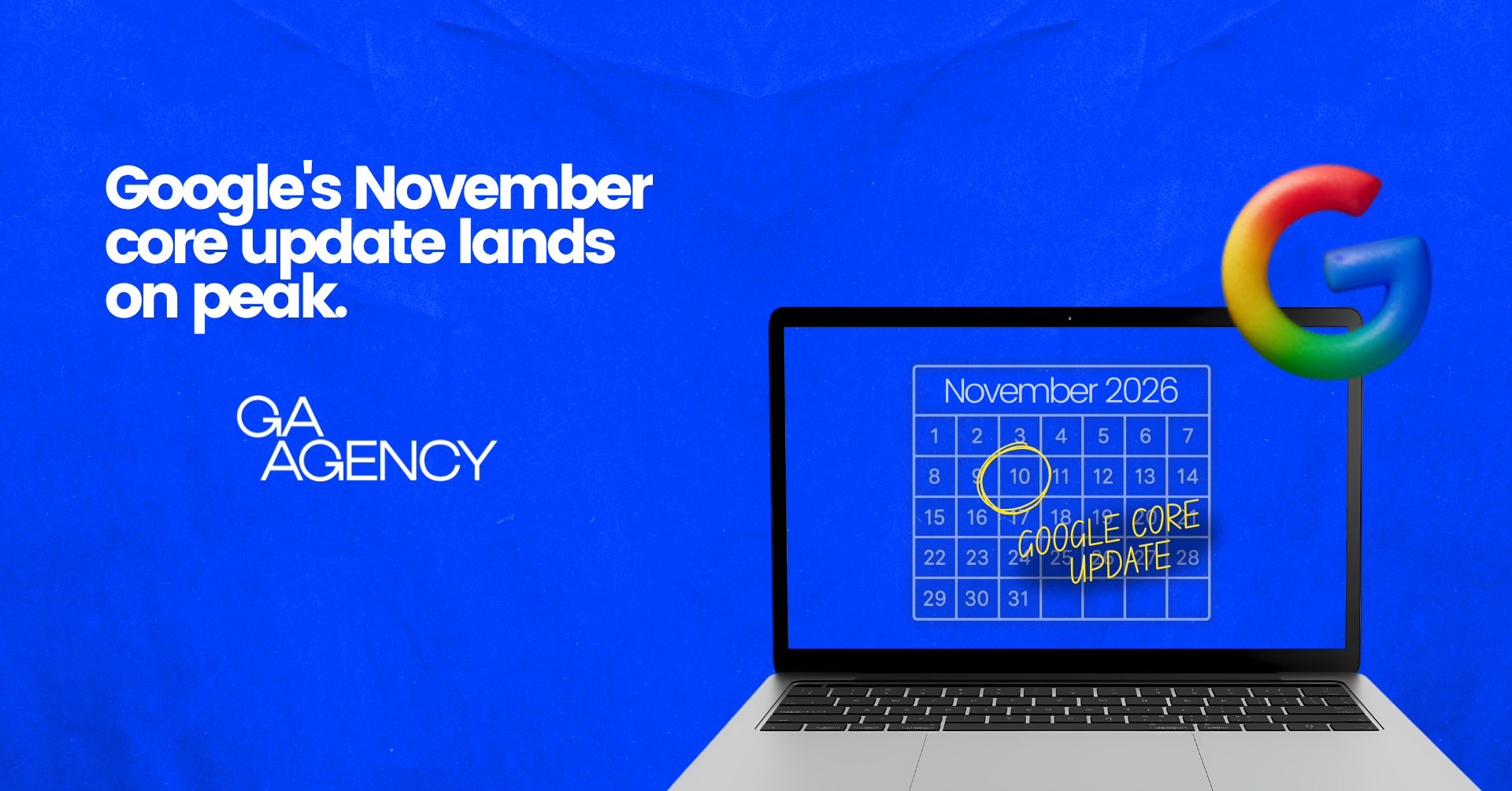
Google began rolling out its November 2026 core update on 10th November. The rollout may take up to two weeks, which would put completion at around 24th November. Google says the update applies globally and to all languages and has described it only as a regular update designed to surface relevant, satisfying content.
Most coverage will focus on who gains and who loses but, for brands with a peak season, the more pressing problem is timing. Google’s own guidance is to wait at least a full week after a rollout completes before assessing its impact. If the rollout wraps up around 24th November, that would place the first clean read on 1st December, the day after Cyber Monday.
The weeks in which the update becomes measurable are the weeks in which organic traffic is least comparable to anything before them. The risk this November is less the ranking change itself than misreading it.
What actually changed
Very little has been disclosed, the Search Status Dashboard entry confirms the start date, the global scope and the two-week window. No Search Central blog post accompanied it and Google has named no specific objectives. Its standing position is that core updates do not target specific sites or pages, but keep its systems current as content on the web changes.
What is clear is the cadence: this is the third broad core update of 2026, after March and May and the eighth ranking update on the dashboard this year, including three spam updates between June and October. Google has also documented that it makes smaller, unannounced core updates on a continual basis, making volatility the normal state of organic search.
The guidance on assessing impact is unchanged: wait a full week after completion, then compare that week with a week before the rollout began. For this update, the baseline should be the week before 10th November.
Why the timing matters
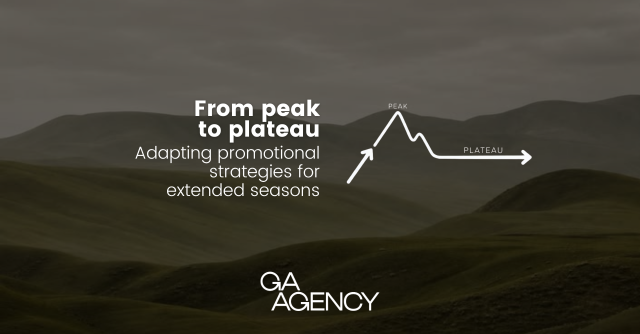
Peak demand and the update will look the same in the data
If the rollout finishes around 24th November, the (comparison) following week will include Thanksgiving (26th November), Black Friday (27th November) and Cyber Monday (30th November). For a retailer, organic sessions in that week will be up sharply on any ordinary early-November week, whatever the update did.
A site that lost visibility on core category terms could still show week-on-week growth. A site that gained could look flat if demand fell short of last year. Neither reading says anything about the update. Across peak, a week-on-week comparison measures seasonality. The method Google recommends is sound in an ordinary month but in peak month, it could need adapting.
“All languages” does not mean the same effect everywhere
Core updates apply globally, but the competitive set and the query mix differ by market. A brand operating across several countries can gain in one market and lose in another and an aggregated dashboard will net the two out.
Peak compounds this. Demand spikes arrive on different dates in different markets, so the distortion does not even land in the same week everywhere. Impact needs reading market by market, in each market’s language and against its own calendar, before anything is rolled up into a single figure.
Reacting mid-rollout carries its own cost
Rankings move during a rollout and often settle differently by the end. Google’s documentation notes that there may be nothing wrong with pages that perform less well after a core update.
Rewriting category pages, restructuring templates or pulling organic-led budgets in late November on the strength of partial data risks creating new problems in the highest-revenue weeks of the year. Decisions taken in this window should be the ones that hold however the update lands.

“Core updates can make performance harder to read. This one could complicate that picture for weeks, because it overlaps with the busiest trading period of the year. The brands best placed to interpret the results will be those that established their baseline before Black Friday”.
Manuel Gubernale, Senior Account Specialist
What to do about it
- Lock the baseline now. Export Search Console performance for the week before 10th November, by market, before peak data starts to accumulate. Pair it with the same weeks of 2025, so there is a year-on-year reference that already contains Black Friday.
- Separate seasonal from non-seasonal queries. Brand, informational and evergreen category queries are far less driven by promotional demand than sale or deal terms. Their movement after 24th November is a much cleaner signal of the update.
- Track rankings independently of traffic. Clicks and impressions rise with demand. Rank tracking for a fixed keyword set in each market does not and gives a read on the update that peak cannot inflate.
- Agree in advance how organic and Paid Media cover for each other. If visibility drops on revenue-critical terms during peak, the response should be a pre-agreed shift in paid coverage. Thresholds and owners are best set before 24th November.
The update is expected to finish rolling out within two weeks. Separating its effect from peak will take until the January data is in and that is where the analysis worth doing sits.
Do you need any guidance? That’s the conversation to have with us.
Sources
- Search Engine Journal, Google’s November 2026 Core Update Starts Rolling Out (10 November 2026)
- Google Search Central, Google Search’s core updates and your website
- Google, Search Status Dashboard: ranking updates

Article author